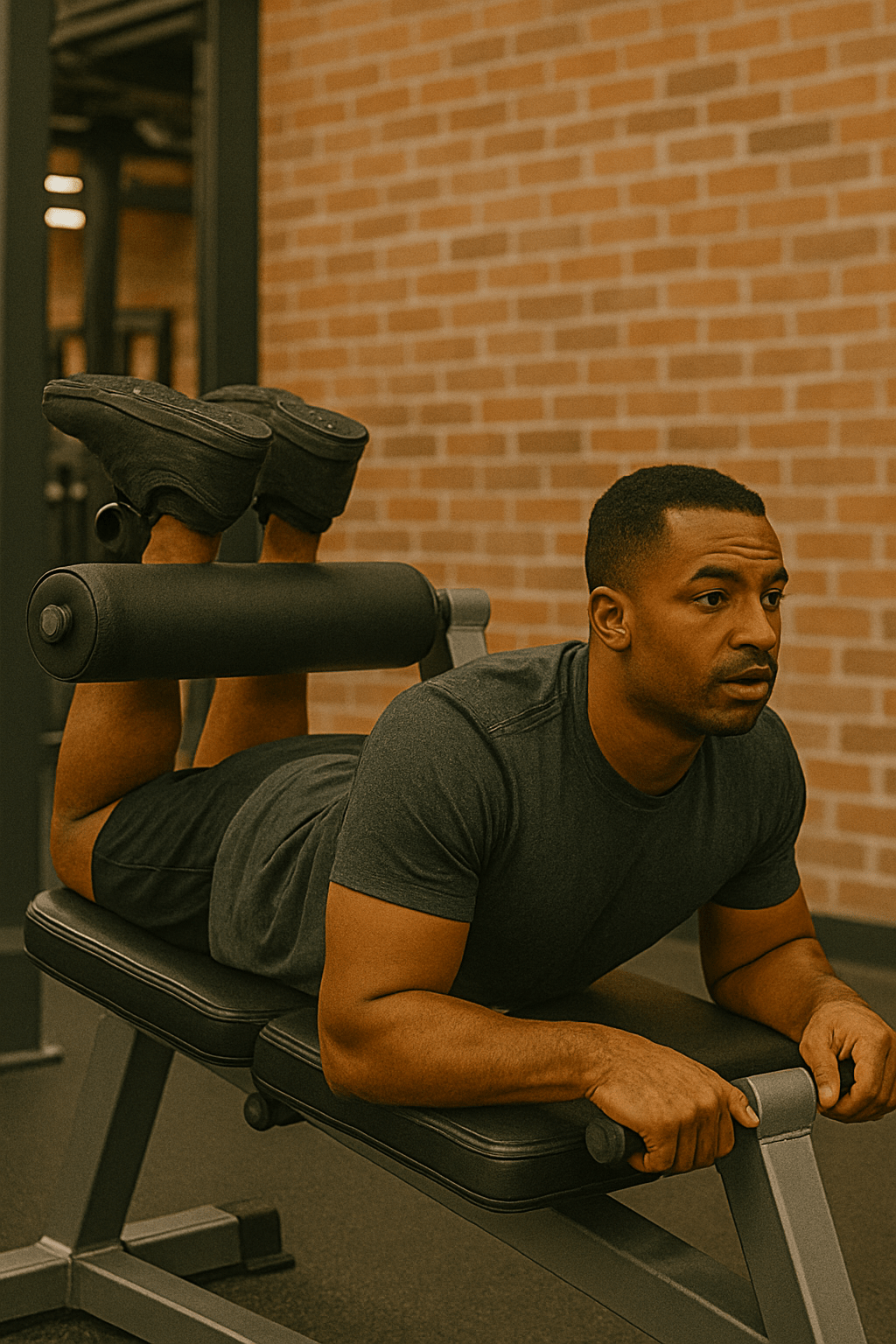

The human spinal column is an architectural marvel designed to support the entire structural weight of your upper body while providing 360-degree rotational mobility and shock absorption during movement. Yet across modern India and global society, chronic lower back pain has erupted into a massive health epidemic, debilitating millions of desk workers, students, and home fitness enthusiasts. The underlying biological root of this epidemic is profound muscular atrophy of the posterior spinal stabilizers: specifically, the thick Erector Spinae columns running alongside your vertebrae, and the deep, segmental Multifidus muscles that lock individual spinal segments together. When these lumbar stabilizers weaken from hours of slumped office chair sitting, your vertebrae compress and shift under daily gravity, transferring destructive shearing forces directly into your intervertebral discs and sciatic nerve roots. To build an indestructible, pain-free spinal structure without commercial gym hyperextension machines or heavy barbells, you must master a comprehensive home lower back workout system based on spinal co-activation, isometric endurance, and controlled hinging mechanics right on your living room floor.
Mastering lower back workouts requires an uncompromising commitment to understanding human spinal biomechanics, optimal stabilization protocols, and evidence-based nutritional strategies. Many home fitness enthusiasts fall victim to commercial shortcuts or misleading advice, yet the actual biological pathways governing spinal health and erector spinae development follow precise scientific rules that, when understood and applied correctly, produce extraordinary and lasting results.
Throughout this comprehensive guide on lower back workouts, we will dismantle prevalent fitness myths and provide you with an actionable, step-by-step framework tailored specifically for the Indian lifestyle. Whether your goal is to build massive lumbar strength, fix postural imbalances, overcome chronic lower back pain, or prevent spinal disc herniations, every single instruction detailed below is backed by clinical research and proven orthopedic rehabilitation protocols used by elite physical therapists.
Before initiating any intensive protocol for lower back workouts, it is essential to establish baseline spinal stability metrics and eliminate daily ergonomic habits that actively compress your intervertebral discs. By combining strict anti-inflammatory nutritional saturation, consistent core-activation routines, and optimized decompression recovery practices, you empower your lower back to express its maximum genetic strength and endurance without risk of injury or chronic pain.
Anatomical Architecture of the Lower Back: Erector Spinae vs. Multifidus
To construct an effective lower back workout at home, you must differentiate between your macroscopic superficial back muscles and your microscopic deep segmental stabilizers. The superficial layer consists of the Erector Spinae group (iliocostalis, longissimus, and spinalis), which run vertically from your sacrum and pelvic crest all the way up to the base of your skull. These thick muscular cables act as the primary structural guy-wires of your spine, generating raw extension power to keep your torso standing upright against gravity.
Lying directly beneath the erector spinae sits the deep segmental Multifidus complex. While the erector spinae move your spine through broad space, the multifidus consists of short, highly specialized muscle fibers spanning across just two or three individual vertebrae. Their sole biological mission is segmental stabilization: locking adjacent spinal bones together like rigid interlocking puzzle pieces milliseconds before your arms or legs move. If your multifidus is dormant or atrophied, your vertebrae slide across each other during forward bending, pinching spinal discs even when your superficial erector spinae muscles are relatively strong.

The Erector Spinae Guy-Wire Suspension System
To fully execute The Erector Spinae Guy-Wire Suspension System effectively, you must maintain uncompromised technical discipline and understand the underlying orthopedic mechanism. Why superficial vertical spinal muscles must maintain balanced resting tone to prevent structural lumbar collapse. When executed consistently over a 60-to-90-day training cycle, this specific protocol forces profound spinal adaptation, strengthening the deep multifidus and erector spinae fibers, improving intervertebral disc hydration, and enhancing neuromuscular core co-activation across the lumbar spine.
Furthermore, integrating The Erector Spinae Guy-Wire Suspension System into your daily routine provides a direct protective shield against modern office-chair posture and chronic lower back fatigue. By focusing on progressive isometric endurance, strict spinal neutrality, and controlled hinging mechanics during lower back workouts, you eliminate common spinal bottlenecks and accelerate your body natural healing capacity. Ensure that every repetition or static hold is performed with abdominal bracing and full muscular control to capture 100% of the biomechanical benefits.
Segmental Multifidus Interlocking Mechanics
To fully execute Segmental Multifidus Interlocking Mechanics effectively, you must maintain uncompromised technical discipline and understand the underlying orthopedic mechanism. How short, deep multifidus fibers fire milliseconds before movement to lock vertebrae into rigid, injury-proof alignment. When executed consistently over a 60-to-90-day training cycle, this specific protocol forces profound spinal adaptation, strengthening the deep multifidus and erector spinae fibers, improving intervertebral disc hydration, and enhancing neuromuscular core co-activation across the lumbar spine.
Furthermore, integrating Segmental Multifidus Interlocking Mechanics into your daily routine provides a direct protective shield against modern office-chair posture and chronic lower back fatigue. By focusing on progressive isometric endurance, strict spinal neutrality, and controlled hinging mechanics during lower back workouts, you eliminate common spinal bottlenecks and accelerate your body natural healing capacity. Ensure that every repetition or static hold is performed with abdominal bracing and full muscular control to capture 100% of the biomechanical benefits.
The Posterior Chain Muscular Continuum
To fully execute The Posterior Chain Muscular Continuum effectively, you must maintain uncompromised technical discipline and understand the underlying orthopedic mechanism. Understanding how your lumbar spine links directly into your gluteus maximus and hamstrings to form a unified lifting kinetic chain. When executed consistently over a 60-to-90-day training cycle, this specific protocol forces profound spinal adaptation, strengthening the deep multifidus and erector spinae fibers, improving intervertebral disc hydration, and enhancing neuromuscular core co-activation across the lumbar spine.
Furthermore, integrating The Posterior Chain Muscular Continuum into your daily routine provides a direct protective shield against modern office-chair posture and chronic lower back fatigue. By focusing on progressive isometric endurance, strict spinal neutrality, and controlled hinging mechanics during lower back workouts, you eliminate common spinal bottlenecks and accelerate your body natural healing capacity. Ensure that every repetition or static hold is performed with abdominal bracing and full muscular control to capture 100% of the biomechanical benefits.
The Biomechanics of Spine Safety: Neutral Spine vs. Flexion Under Load
Before executing any lower back strengthening movement at home, you must understand the absolute golden orthopedic rule of spinal mechanics: Never load the lumbar spine while it is in a state of sustained flexion (rounding forward). Intervertebral discs consist of a tough outer fibrous ring (the annulus fibrosus) enclosing a gel-like center (the nucleus pulposus). When your spine sits in a neutral, natural S-curve, compressive forces are distributed evenly across the entire surface area of the disc cartilage.
However, when you round your lower back forward while bending to lift your torso or an object off the floor, the anterior edge of the vertebrae pinches together like a hydraulic vise. This pinching forces the internal gel core backward against the weakened posterior wall of the disc. Subjecting a rounded lumbar spine to repeated mechanical loading under gravity causes the gel to bulge outward (disc protrusion) or tear straight through the outer wall (disc herniation), compressing the sciatic nerve. Every exercise in our home lower back system strictly enforces Lumbar Neutrality and hinging exclusively at the hip joints.

Hydraulic Disc Compression Physics
To fully execute Hydraulic Disc Compression Physics effectively, you must maintain uncompromised technical discipline and understand the underlying orthopedic mechanism. Why rounding your lower back shifts 100 percent of compressive torque onto the posterior annulus fibrosus cartilage wall. When executed consistently over a 60-to-90-day training cycle, this specific protocol forces profound spinal adaptation, strengthening the deep multifidus and erector spinae fibers, improving intervertebral disc hydration, and enhancing neuromuscular core co-activation across the lumbar spine.
Furthermore, integrating Hydraulic Disc Compression Physics into your daily routine provides a direct protective shield against modern office-chair posture and chronic lower back fatigue. By focusing on progressive isometric endurance, strict spinal neutrality, and controlled hinging mechanics during lower back workouts, you eliminate common spinal bottlenecks and accelerate your body natural healing capacity. Ensure that every repetition or static hold is performed with abdominal bracing and full muscular control to capture 100% of the biomechanical benefits.
The Hip-Hinge Separation Principle
To fully execute The Hip-Hinge Separation Principle effectively, you must maintain uncompromised technical discipline and understand the underlying orthopedic mechanism. Learning to lock your lumbar spine motionless while bending purely by pushing your hips backward and pivoting at the hip joints. When executed consistently over a 60-to-90-day training cycle, this specific protocol forces profound spinal adaptation, strengthening the deep multifidus and erector spinae fibers, improving intervertebral disc hydration, and enhancing neuromuscular core co-activation across the lumbar spine.
Furthermore, integrating The Hip-Hinge Separation Principle into your daily routine provides a direct protective shield against modern office-chair posture and chronic lower back fatigue. By focusing on progressive isometric endurance, strict spinal neutrality, and controlled hinging mechanics during lower back workouts, you eliminate common spinal bottlenecks and accelerate your body natural healing capacity. Ensure that every repetition or static hold is performed with abdominal bracing and full muscular control to capture 100% of the biomechanical benefits.
Bracing vs. Hollow-Body Abdominal Mechanics
To fully execute Bracing vs. Hollow-Body Abdominal Mechanics effectively, you must maintain uncompromised technical discipline and understand the underlying orthopedic mechanism. Why pushing your abdominal wall outward like a rigid pressurized cylinder creates 360-degree spinal support compared to sucking in your stomach. When executed consistently over a 60-to-90-day training cycle, this specific protocol forces profound spinal adaptation, strengthening the deep multifidus and erector spinae fibers, improving intervertebral disc hydration, and enhancing neuromuscular core co-activation across the lumbar spine.
Furthermore, integrating Bracing vs. Hollow-Body Abdominal Mechanics into your daily routine provides a direct protective shield against modern office-chair posture and chronic lower back fatigue. By focusing on progressive isometric endurance, strict spinal neutrality, and controlled hinging mechanics during lower back workouts, you eliminate common spinal bottlenecks and accelerate your body natural healing capacity. Ensure that every repetition or static hold is performed with abdominal bracing and full muscular control to capture 100% of the biomechanical benefits.
Foundational Home Spine Builders: Prone Cobra & Floor Superman
To awaken dormant erector spinae fibers and build baseline spinal extension strength without gym equipment, your home training must begin on the floor with two foundational prone (face-down) bodyweight movements: The Prone Cobra and The Floor Superman. Both exercises utilize anti-gravity extension mechanics to overload the posterior chain safely.
For the Prone Cobra: lie face down flat across your yoga mat with your arms resting at your sides and palms facing down against the carpet. Squeeze your glutes tightly to anchor your pelvis, then pull your shoulder blades together and lift your chest, chin, and palms 3 inches off the carpet simultaneously. Rotate your thumbs outward pointing toward the ceiling to open your chest, and hold this static extension motionless for 15 strict seconds before lowering over 3 seconds. For the Floor Superman: extend your arms straight out in front of your head like Superman flying. Squeeze your lower back and glutes to simultaneously lift your arms, chest, thighs, and feet 4 inches off the floor, balancing purely on your abdominal core. Hold the top contraction for 2 strict seconds; complete 12 reps.

Prone Cobra Scapular & Lumbar Co-Contraction
To fully execute Prone Cobra Scapular & Lumbar Co-Contraction effectively, you must maintain uncompromised technical discipline and understand the underlying orthopedic mechanism. Lifting chest and rotating thumbs outward to simultaneously strengthen upper thoracic postural muscles and lower lumbar erectors. When executed consistently over a 60-to-90-day training cycle, this specific protocol forces profound spinal adaptation, strengthening the deep multifidus and erector spinae fibers, improving intervertebral disc hydration, and enhancing neuromuscular core co-activation across the lumbar spine.
Furthermore, integrating Prone Cobra Scapular & Lumbar Co-Contraction into your daily routine provides a direct protective shield against modern office-chair posture and chronic lower back fatigue. By focusing on progressive isometric endurance, strict spinal neutrality, and controlled hinging mechanics during lower back workouts, you eliminate common spinal bottlenecks and accelerate your body natural healing capacity. Ensure that every repetition or static hold is performed with abdominal bracing and full muscular control to capture 100% of the biomechanical benefits.
Superman Bi-Directional Anti-Gravity Extension
To fully execute Superman Bi-Directional Anti-Gravity Extension effectively, you must maintain uncompromised technical discipline and understand the underlying orthopedic mechanism. Lifting both arms and legs off the floor to subject the entire posterior chain from heels to neck to uniform extension overload. When executed consistently over a 60-to-90-day training cycle, this specific protocol forces profound spinal adaptation, strengthening the deep multifidus and erector spinae fibers, improving intervertebral disc hydration, and enhancing neuromuscular core co-activation across the lumbar spine.
Furthermore, integrating Superman Bi-Directional Anti-Gravity Extension into your daily routine provides a direct protective shield against modern office-chair posture and chronic lower back fatigue. By focusing on progressive isometric endurance, strict spinal neutrality, and controlled hinging mechanics during lower back workouts, you eliminate common spinal bottlenecks and accelerate your body natural healing capacity. Ensure that every repetition or static hold is performed with abdominal bracing and full muscular control to capture 100% of the biomechanical benefits.
Glute Pre-Activation Anchor Rule
To fully execute Glute Pre-Activation Anchor Rule effectively, you must maintain uncompromised technical discipline and understand the underlying orthopedic mechanism. Why squeezing your glutes tightly BEFORE lifting your chest protects your lumbar vertebrae from excessive hyper-lordotic compression. When executed consistently over a 60-to-90-day training cycle, this specific protocol forces profound spinal adaptation, strengthening the deep multifidus and erector spinae fibers, improving intervertebral disc hydration, and enhancing neuromuscular core co-activation across the lumbar spine.
Furthermore, integrating Glute Pre-Activation Anchor Rule into your daily routine provides a direct protective shield against modern office-chair posture and chronic lower back fatigue. By focusing on progressive isometric endurance, strict spinal neutrality, and controlled hinging mechanics during lower back workouts, you eliminate common spinal bottlenecks and accelerate your body natural healing capacity. Ensure that every repetition or static hold is performed with abdominal bracing and full muscular control to capture 100% of the biomechanical benefits.
McGill Big 3 Integration: The Bird-Dog & Side Plank Stabilization
No lower back home workout system is complete without incorporating the world-renowned ‘McGill Big 3’ stabilization protocol developed by spinal biomechanic professor Dr. Stuart McGill. While extension exercises like supermans build raw muscle mass, Dr. McGill’s research proved that spinal injury prevention is governed by Isometric Endurance — the ability of your deep stabilizers to hold your spine motionless under unpredictable daily forces.
The two premier McGill home movements are the Bird-Dog and the Side Plank. For the Bird-Dog: assume a quadruped table-top position on your hands and knees with your spine perfectly flat and neutral. Squeeze your abdominal core, then slowly extend your right arm straight forward at ear height while simultaneously extending your left leg straight backward at hip height. Hold this cross-body balance motionless for 10 strict seconds without allowing your lower back to arch or your hips to twist even one millimeter. Return to center and swap diagonal pairs for 6 reps per side. For the Side Plank: lie on your side propped up on your forearm, lift your hips off the mat to form a rigid diagonal plank, and hold motionless for 30 to 45 seconds per side to build bulletproof lateral spinal stability.

Diagonal Cross-Body Stabilization Vectors
To fully execute Diagonal Cross-Body Stabilization Vectors effectively, you must maintain uncompromised technical discipline and understand the underlying orthopedic mechanism. Extending opposite arm and leg to force the deep multifidus to resist rotational torque across the lumbar vertebrae. When executed consistently over a 60-to-90-day training cycle, this specific protocol forces profound spinal adaptation, strengthening the deep multifidus and erector spinae fibers, improving intervertebral disc hydration, and enhancing neuromuscular core co-activation across the lumbar spine.
Furthermore, integrating Diagonal Cross-Body Stabilization Vectors into your daily routine provides a direct protective shield against modern office-chair posture and chronic lower back fatigue. By focusing on progressive isometric endurance, strict spinal neutrality, and controlled hinging mechanics during lower back workouts, you eliminate common spinal bottlenecks and accelerate your body natural healing capacity. Ensure that every repetition or static hold is performed with abdominal bracing and full muscular control to capture 100% of the biomechanical benefits.
Lateral Quadratus Lumborum (QL) Armor Building
To fully execute Lateral Quadratus Lumborum (QL) Armor Building effectively, you must maintain uncompromised technical discipline and understand the underlying orthopedic mechanism. Using side planks to strengthen the deep side-flank muscles that prevent your spine from bending sideways under uneven loads. When executed consistently over a 60-to-90-day training cycle, this specific protocol forces profound spinal adaptation, strengthening the deep multifidus and erector spinae fibers, improving intervertebral disc hydration, and enhancing neuromuscular core co-activation across the lumbar spine.
Furthermore, integrating Lateral Quadratus Lumborum (QL) Armor Building into your daily routine provides a direct protective shield against modern office-chair posture and chronic lower back fatigue. By focusing on progressive isometric endurance, strict spinal neutrality, and controlled hinging mechanics during lower back workouts, you eliminate common spinal bottlenecks and accelerate your body natural healing capacity. Ensure that every repetition or static hold is performed with abdominal bracing and full muscular control to capture 100% of the biomechanical benefits.
The 10-Second Descending-Pyramid Endurance Technique
To fully execute The 10-Second Descending-Pyramid Endurance Technique effectively, you must maintain uncompromised technical discipline and understand the underlying orthopedic mechanism. Performing 6 reps of 10 seconds, then 4 reps of 10 seconds, then 2 reps of 10 seconds to maximize spinal endurance safely. When executed consistently over a 60-to-90-day training cycle, this specific protocol forces profound spinal adaptation, strengthening the deep multifidus and erector spinae fibers, improving intervertebral disc hydration, and enhancing neuromuscular core co-activation across the lumbar spine.
Furthermore, integrating The 10-Second Descending-Pyramid Endurance Technique into your daily routine provides a direct protective shield against modern office-chair posture and chronic lower back fatigue. By focusing on progressive isometric endurance, strict spinal neutrality, and controlled hinging mechanics during lower back workouts, you eliminate common spinal bottlenecks and accelerate your body natural healing capacity. Ensure that every repetition or static hold is performed with abdominal bracing and full muscular control to capture 100% of the biomechanical benefits.
The Complete 30-Minute Home Spine Strengthening Master Routine
To synthesize these extension and stabilization movements into an elite home lower back conditioning session, execute this complete 30-minute routine exactly 3 days per week (for example, Monday, Wednesday, and Friday). You will need your yoga mat and your living room carpet.
Master Routine Flow: Phase 1 (Spinal Awakening): 3 minutes of Cat-Camel gentle spinal mobilization rolls (rest 30s); Phase 2 (Isometric Stabilization): Exercise 1: The McGill Bird-Dog — 3 sets of 6 descending pyramid holds per diagonal side (rest 60s); Exercise 2: Strict Side Planks — 3 sets of 45 seconds per side (rest 60s); Phase 3 (Erector Hypertrophy): Exercise 3: Prone Cobra Static Holds — 4 sets of 20-second holds with outward thumb rotation (rest 45s); Exercise 4: Strict Floor Supermans with 2-second top pause — 4 sets of 12 to 15 reps (rest 60s); Exercise 5: Prone Swimmers (alternating right arm/left leg flutters off floor) — 2 burnout sets of 40 total flutters (rest 60s). Your lower back will achieve astonishing strength and fatigue resistance.

Chronological Mobilization to Hypertrophy Flow
To fully execute Chronological Mobilization to Hypertrophy Flow effectively, you must maintain uncompromised technical discipline and understand the underlying orthopedic mechanism. Lubricating spinal joints first, establishing rigid isometric stability second, and building thick erector spinae mass last. When executed consistently over a 60-to-90-day training cycle, this specific protocol forces profound spinal adaptation, strengthening the deep multifidus and erector spinae fibers, improving intervertebral disc hydration, and enhancing neuromuscular core co-activation across the lumbar spine.
Furthermore, integrating Chronological Mobilization to Hypertrophy Flow into your daily routine provides a direct protective shield against modern office-chair posture and chronic lower back fatigue. By focusing on progressive isometric endurance, strict spinal neutrality, and controlled hinging mechanics during lower back workouts, you eliminate common spinal bottlenecks and accelerate your body natural healing capacity. Ensure that every repetition or static hold is performed with abdominal bracing and full muscular control to capture 100% of the biomechanical benefits.
Strict Breathing Under Isometric Tension
To fully execute Strict Breathing Under Isometric Tension effectively, you must maintain uncompromised technical discipline and understand the underlying orthopedic mechanism. Practicing continuous diaphragmatic breathing through pursed lips while holding bird-dogs and side planks to maintain core stiffness. When executed consistently over a 60-to-90-day training cycle, this specific protocol forces profound spinal adaptation, strengthening the deep multifidus and erector spinae fibers, improving intervertebral disc hydration, and enhancing neuromuscular core co-activation across the lumbar spine.
Furthermore, integrating Strict Breathing Under Isometric Tension into your daily routine provides a direct protective shield against modern office-chair posture and chronic lower back fatigue. By focusing on progressive isometric endurance, strict spinal neutrality, and controlled hinging mechanics during lower back workouts, you eliminate common spinal bottlenecks and accelerate your body natural healing capacity. Ensure that every repetition or static hold is performed with abdominal bracing and full muscular control to capture 100% of the biomechanical benefits.
The 24-Hour Spinal Recovery Check
To fully execute The 24-Hour Spinal Recovery Check effectively, you must maintain uncompromised technical discipline and understand the underlying orthopedic mechanism. Why lower back muscles should feel tight and dense like muscular armor the next day without any sharp nerve throbbing. When executed consistently over a 60-to-90-day training cycle, this specific protocol forces profound spinal adaptation, strengthening the deep multifidus and erector spinae fibers, improving intervertebral disc hydration, and enhancing neuromuscular core co-activation across the lumbar spine.
Furthermore, integrating The 24-Hour Spinal Recovery Check into your daily routine provides a direct protective shield against modern office-chair posture and chronic lower back fatigue. By focusing on progressive isometric endurance, strict spinal neutrality, and controlled hinging mechanics during lower back workouts, you eliminate common spinal bottlenecks and accelerate your body natural healing capacity. Ensure that every repetition or static hold is performed with abdominal bracing and full muscular control to capture 100% of the biomechanical benefits.
Indian High-Protein & Anti-Inflammatory Nutrition for Spinal Repair
Because lower back workouts subject your deep erector spinae fibers and intervertebral disc structures to heavy mechanical tension and isometric hold times, your lower spinal tissues undergo extensive Z-disc micro-trauma and metabolic waste accumulation. If your daily protein and mineral intake falls short, your spinal stabilizers will remain fatigued and vulnerable to collapse during daily activities.
Within 45 minutes post-workout, consume a large recovery shake: 300ml whole milk blended with 1.5 scoops of whey protein, 2 bananas, and 1 tablespoon of peanut butter (delivering 45g complete protein and simple sugars to halt catabolism instantly). For dinner, consume 300g of organic homemade paneer curry or chicken breast paired with 3 cups of white rice, yellow dal, and fresh green spinach (palak). The spinach provides natural magnesium and zinc to accelerate overnight collagen and disc cartilage repair, while daily morning Haldi Doodh (turmeric milk) naturally suppresses spinal inflammation.

The 45-Minute Post-Workout Whey & Banana Shake
To fully execute The 45-Minute Post-Workout Whey & Banana Shake effectively, you must maintain uncompromised technical discipline and understand the underlying orthopedic mechanism. Shuttling fast-absorbing whey protein and simple sugars into damaged erector spinae fibers within the peak anabolic window. When executed consistently over a 60-to-90-day training cycle, this specific protocol forces profound spinal adaptation, strengthening the deep multifidus and erector spinae fibers, improving intervertebral disc hydration, and enhancing neuromuscular core co-activation across the lumbar spine.
Furthermore, integrating The 45-Minute Post-Workout Whey & Banana Shake into your daily routine provides a direct protective shield against modern office-chair posture and chronic lower back fatigue. By focusing on progressive isometric endurance, strict spinal neutrality, and controlled hinging mechanics during lower back workouts, you eliminate common spinal bottlenecks and accelerate your body natural healing capacity. Ensure that every repetition or static hold is performed with abdominal bracing and full muscular control to capture 100% of the biomechanical benefits.
High-Calorie Paneer & White Rice Dinner Matrix
To fully execute High-Calorie Paneer & White Rice Dinner Matrix effectively, you must maintain uncompromised technical discipline and understand the underlying orthopedic mechanism. Utilizing traditional Indian dairy protein paired with easily digestible white rice to completely restore lumbar muscle glycogen. When executed consistently over a 60-to-90-day training cycle, this specific protocol forces profound spinal adaptation, strengthening the deep multifidus and erector spinae fibers, improving intervertebral disc hydration, and enhancing neuromuscular core co-activation across the lumbar spine.
Furthermore, integrating High-Calorie Paneer & White Rice Dinner Matrix into your daily routine provides a direct protective shield against modern office-chair posture and chronic lower back fatigue. By focusing on progressive isometric endurance, strict spinal neutrality, and controlled hinging mechanics during lower back workouts, you eliminate common spinal bottlenecks and accelerate your body natural healing capacity. Ensure that every repetition or static hold is performed with abdominal bracing and full muscular control to capture 100% of the biomechanical benefits.
Turmeric & Ginger Curcumin Spinal Decompression Matrix
To fully execute Turmeric & Ginger Curcumin Spinal Decompression Matrix effectively, you must maintain uncompromised technical discipline and understand the underlying orthopedic mechanism. Consuming daily Haldi Doodh to naturally reduce intervertebral disc swelling and calm irritated sciatic nerve roots. When executed consistently over a 60-to-90-day training cycle, this specific protocol forces profound spinal adaptation, strengthening the deep multifidus and erector spinae fibers, improving intervertebral disc hydration, and enhancing neuromuscular core co-activation across the lumbar spine.
Furthermore, integrating Turmeric & Ginger Curcumin Spinal Decompression Matrix into your daily routine provides a direct protective shield against modern office-chair posture and chronic lower back fatigue. By focusing on progressive isometric endurance, strict spinal neutrality, and controlled hinging mechanics during lower back workouts, you eliminate common spinal bottlenecks and accelerate your body natural healing capacity. Ensure that every repetition or static hold is performed with abdominal bracing and full muscular control to capture 100% of the biomechanical benefits.

Frequently Asked Questions (FAQs) About Lower Back Workouts
Can I perform lower back workouts at home if I already have mild lower back pain from sitting?
Yes, absolutely. In fact, mild lower back ache from prolonged sitting is almost always caused by muscular weakness and disc compression. Starting our 30-minute routine with gentle Cat-Camel rolls and McGill Bird-Dogs immediately decompresses the spine and relieves postural pain within days. By strictly following the spinal biomechanics and nutritional guidelines detailed in this guide on lower back workouts, you can safely achieve rapid, noticeable improvements in lower back strength while protecting your long-term spinal health.
Why does my lower back cramp up when I hold the top position of the floor superman?
Lower back cramping during supermans indicates weak, dormant erector spinae fibers attempting to lift too much weight too fast, or forgetting to squeeze your glutes first. Squeeze your buttocks tightly to anchor your pelvis before lifting your chest off the carpet. By strictly following the spinal biomechanics and nutritional guidelines detailed in this guide on lower back workouts, you can safely achieve rapid, noticeable improvements in lower back strength while protecting your long-term spinal health.
How many days per week should I train my lower back muscles at home for best results?
Because deep postural muscles like the multifidus are dominated by Type I slow-twitch endurance fibers, training your lower back exactly 3 non-consecutive days per week (such as Monday, Wednesday, and Friday) provides optimal stimulus for both strength and spinal endurance. By strictly following the spinal biomechanics and nutritional guidelines detailed in this guide on lower back workouts, you can safely achieve rapid, noticeable improvements in lower back strength while protecting your long-term spinal health.
What is the difference between a prone cobra and a floor superman exercise?
The Prone Cobra involves keeping your toes on the carpet while lifting only your chest and rotating your thumbs outward, which targets thoracic posture and upper lumbar stabilizers. The Floor Superman lifts both arms and legs off the carpet simultaneously, overloading the entire lower lumbar erector column. By strictly following the spinal biomechanics and nutritional guidelines detailed in this guide on lower back workouts, you can safely achieve rapid, noticeable improvements in lower back strength while protecting your long-term spinal health.
Can doing lower back workouts at home help fix a protruding or herniated spinal disc?
Yes. By strengthening the deep segmental multifidus and erector spinae muscles through neutral-spine bird-dogs and side planks, you create a rigid muscular corset that supports your vertebrae, taking pressure off herniated discs and allowing natural cartilage healing to occur over 60 to 90 days. By strictly following the spinal biomechanics and nutritional guidelines detailed in this guide on lower back workouts, you can safely achieve rapid, noticeable improvements in lower back strength while protecting your long-term spinal health.