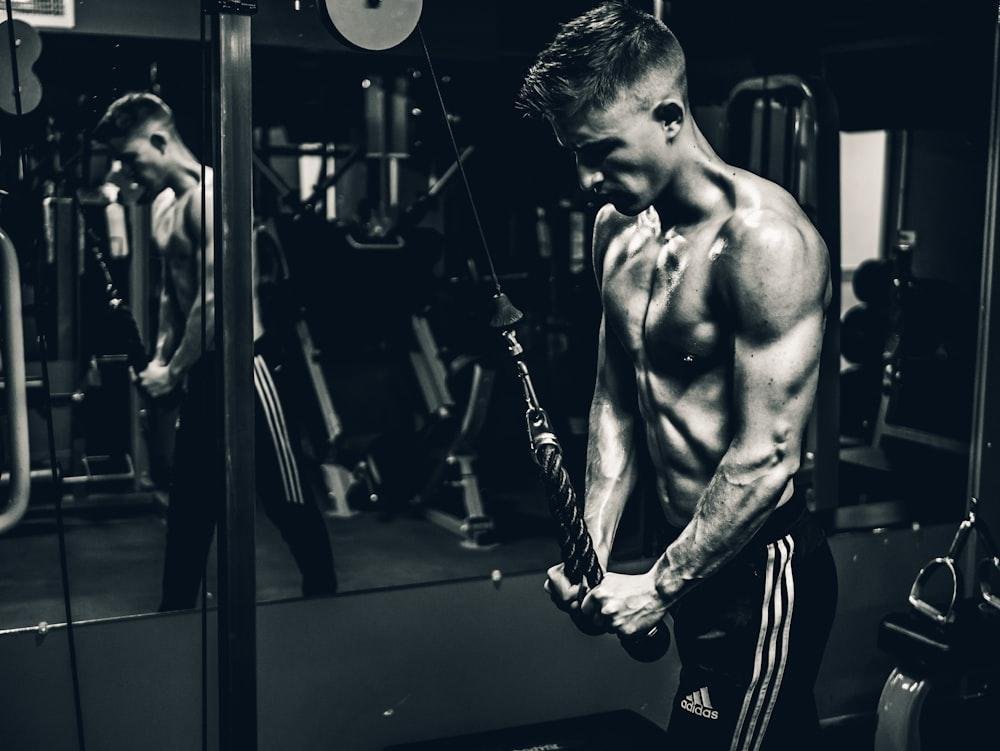

When inspecting the upper arms of professional natural bodybuilders and elite strength athletes, the sheer physical thickness and hanging meat of their triceps is truly breathtaking. That massive, sweeping bulk running down the entire back and inside of the upper arm from armpit to elbow is driven almost entirely by one single anatomical head: the Long Head of the triceps brachii. While diamond pushups and chair dips excel at etching out the outer lateral horseshoe sweep, they fail to subject the bi-articular long head to full stretch-mediated overload. Because the long head crosses both your elbow joint and your shoulder joint, it can only reach its absolute maximum mechanical stretch and hypertrophic potential when your arms are elevated vertically directly above your head. By mastering the Overhead Tricep Extension at home using simple adjustable dumbbells or heavy household water bottles, you unlock the biological key that adds up to 60 percent of total upper arm size.
Mastering overhead tricep extension requires an uncompromising commitment to understanding human biomechanics, optimal training protocols, and evidence-based nutritional strategies. Many home fitness enthusiasts fall victim to commercial shortcuts or misleading advice, yet the actual biological pathways governing physical development follow precise scientific rules that, when understood and applied correctly, produce extraordinary and lasting results.
Throughout this comprehensive guide on overhead tricep extension, we will dismantle prevalent fitness myths and provide you with an actionable, step-by-step framework tailored specifically for the Indian lifestyle. Whether your goal is to build massive muscle, fix postural imbalances, overcome training plateaus, or prevent joint injuries, every single instruction detailed below is backed by clinical research and proven athletic protocols used by elite strength coaches and physiotherapists.
Before initiating any intensive protocol for overhead tricep extension, it is essential to establish baseline metrics and eliminate daily environmental habits that actively limit your development or recovery. By combining strict nutritional saturation, consistent training routines, and optimized recovery practices, you empower your body to express its maximum genetic and epigenetic potential without risk of injury or overtraining syndrome.
Bi-Articular Anatomy: Why Overhead Arm Elevation Is Mandatory for Long Head Growth
To understand why overhead extensions are mandatory for transforming thin arms into muscular pillars, you must examine the unique bi-articular anatomy of the triceps long head. The lateral and medial heads of your triceps originate on your humerus (upper arm bone) and insert at your elbow; because they only cross one joint (the elbow), their length and tension are unaffected by where your arm is positioned in space.
The Long Head is radically different: it originates high up on the infraglenoid tubercle of your scapula (shoulder blade) and runs all the way down across your elbow joint. Because it crosses both the shoulder and elbow joints, when your arms are resting down at your sides during standard pushdowns or horizontal pushups, the long head sits in a slack, shortened anatomical state where it cannot experience full mechanical tension. Only when you raise your arms vertically overhead directly alongside your ears does the long head stretch to its extreme anatomical length across the shoulder blade. Lowering a heavy weight behind your head from this overhead position subjects the long head to explosive stretch-mediated hypertrophy that horizontal exercises cannot duplicate.
Scapular Origin to Elbow Insertion Biomechanics
To fully execute Scapular Origin to Elbow Insertion Biomechanics effectively, you must maintain uncompromised technical discipline and understand the underlying physiological mechanism. Why crossing two joints requires elevating upper arms vertically overhead to stretch the long head across its full length. When executed consistently over a 60-to-90-day training cycle, this specific protocol forces profound structural adaptation, strengthening the surrounding connective tissues, improving localized vascularity, and enhancing neuromuscular coordination across the target muscle groups.
Furthermore, integrating Scapular Origin to Elbow Insertion Biomechanics into your daily routine provides a direct competitive advantage over generic training programs. By focusing on progressive overload, strict time-under-tension, and optimal joint alignment during overhead tricep extension, you eliminate common biomechanical bottlenecks and accelerate your body natural recovery capacity. Ensure that every repetition or static hold is performed with deliberate breathing and full range of motion to capture 100% of the anatomical benefits.
Stretch-Mediated Hypertrophy & Sarcomere Addition
To fully execute Stretch-Mediated Hypertrophy & Sarcomere Addition effectively, you must maintain uncompromised technical discipline and understand the underlying physiological mechanism. How lowering weights behind your head under eccentric tension adds sarcomeres in series to thicken hanging arm mass. When executed consistently over a 60-to-90-day training cycle, this specific protocol forces profound structural adaptation, strengthening the surrounding connective tissues, improving localized vascularity, and enhancing neuromuscular coordination across the target muscle groups.
Furthermore, integrating Stretch-Mediated Hypertrophy & Sarcomere Addition into your daily routine provides a direct competitive advantage over generic training programs. By focusing on progressive overload, strict time-under-tension, and optimal joint alignment during overhead tricep extension, you eliminate common biomechanical bottlenecks and accelerate your body natural recovery capacity. Ensure that every repetition or static hold is performed with deliberate breathing and full range of motion to capture 100% of the anatomical benefits.
The 60% Total Upper Arm Volume Factor
To fully execute The 60% Total Upper Arm Volume Factor effectively, you must maintain uncompromised technical discipline and understand the underlying physiological mechanism. Understanding that the long head accounts for two-thirds of your triceps, making overhead extensions the #1 mass builder. When executed consistently over a 60-to-90-day training cycle, this specific protocol forces profound structural adaptation, strengthening the surrounding connective tissues, improving localized vascularity, and enhancing neuromuscular coordination across the target muscle groups.
Furthermore, integrating The 60% Total Upper Arm Volume Factor into your daily routine provides a direct competitive advantage over generic training programs. By focusing on progressive overload, strict time-under-tension, and optimal joint alignment during overhead tricep extension, you eliminate common biomechanical bottlenecks and accelerate your body natural recovery capacity. Ensure that every repetition or static hold is performed with deliberate breathing and full range of motion to capture 100% of the anatomical benefits.
Seated vs. Standing Overhead Extensions: Core Stabilization & Spine Alignment
When performing overhead extensions at home with dumbbells or water bottles, your first critical setup decision is whether to execute the movement while Seated upright on a dining chair or while Standing tall on the carpet. Both variations build massive tricep size, but they place distinctly different demands across your lumbar spine and abdominal core.
Standing Overhead Extensions force your entire abdominal and glute core to contract with isometric rigidity to stabilize the heavy weight overhead, burning extra calories and building functional postural strength alongside arm size. However, if your core fatigues before your arms, your lower back will arch into dangerous hyperextension. Seated Overhead Extensions across a sturdy dining chair with a vertical backrest completely eliminate lower back arching and core fatigue, locking your torso stable so you can focus 100 percent of your mental and physical energy into lifting heavier weights and achieving absolute tricep failure safely.

Standing Isometric Glute & Abdominal Bracing
To fully execute Standing Isometric Glute & Abdominal Bracing effectively, you must maintain uncompromised technical discipline and understand the underlying physiological mechanism. Squeezing glutes and abs tight during standing extensions to lock your spine neutral and prevent dangerous lumbar arching. When executed consistently over a 60-to-90-day training cycle, this specific protocol forces profound structural adaptation, strengthening the surrounding connective tissues, improving localized vascularity, and enhancing neuromuscular coordination across the target muscle groups.
Furthermore, integrating Standing Isometric Glute & Abdominal Bracing into your daily routine provides a direct competitive advantage over generic training programs. By focusing on progressive overload, strict time-under-tension, and optimal joint alignment during overhead tricep extension, you eliminate common biomechanical bottlenecks and accelerate your body natural recovery capacity. Ensure that every repetition or static hold is performed with deliberate breathing and full range of motion to capture 100% of the anatomical benefits.
Seated Backrest Isolation & Heavy Weight Overload
To fully execute Seated Backrest Isolation & Heavy Weight Overload effectively, you must maintain uncompromised technical discipline and understand the underlying physiological mechanism. Using a vertical dining chair backrest to eliminate core cheating and allow 15 percent heavier resistance loading. When executed consistently over a 60-to-90-day training cycle, this specific protocol forces profound structural adaptation, strengthening the surrounding connective tissues, improving localized vascularity, and enhancing neuromuscular coordination across the target muscle groups.
Furthermore, integrating Seated Backrest Isolation & Heavy Weight Overload into your daily routine provides a direct competitive advantage over generic training programs. By focusing on progressive overload, strict time-under-tension, and optimal joint alignment during overhead tricep extension, you eliminate common biomechanical bottlenecks and accelerate your body natural recovery capacity. Ensure that every repetition or static hold is performed with deliberate breathing and full range of motion to capture 100% of the anatomical benefits.
Elbow-Position Tucking Discipline
To fully execute Elbow-Position Tucking Discipline effectively, you must maintain uncompromised technical discipline and understand the underlying physiological mechanism. Keeping upper arms pointing straight up beside your ears rather than flaring wide outward to keep 100% tension on long head. When executed consistently over a 60-to-90-day training cycle, this specific protocol forces profound structural adaptation, strengthening the surrounding connective tissues, improving localized vascularity, and enhancing neuromuscular coordination across the target muscle groups.
Furthermore, integrating Elbow-Position Tucking Discipline into your daily routine provides a direct competitive advantage over generic training programs. By focusing on progressive overload, strict time-under-tension, and optimal joint alignment during overhead tricep extension, you eliminate common biomechanical bottlenecks and accelerate your body natural recovery capacity. Ensure that every repetition or static hold is performed with deliberate breathing and full range of motion to capture 100% of the anatomical benefits.
Two-Handed Dumbbell/Water-Jug Overhead Extension: Execution Checklist
The Two-Handed Single Dumbbell (or heavy 15-liter water jug) Overhead Extension is your foundational compound mass builder for the long head. Grasp one heavy dumbbell vertically, cupping the inside of the upper weight plate with both palms facing upward around the handle (or hold the side handles of a heavy water jug securely with both hands). Sit upright on your dining chair and press the weight straight upward over your head until both elbows are nearly locked.
Keep your upper arms locked motionless beside your ears pointing straight toward the ceiling throughout the entire exercise — your elbows must never drift forward, backward, or flare wide out to the sides. Slowly lower the weight directly down behind your head over 3 strict seconds by bending your elbows until your forearms touch your biceps and you feel an intense, skin-stretching pull running from your armpits down to your elbows. Hold this absolute bottom stretch motionless for 1 strict second without bouncing off your neck, then drive through your palms to extend the weight back overhead to top lockout. Perform 4 sets of 12 strict reps.

Diamond-Palm Cupping Grip Mechanics
To fully execute Diamond-Palm Cupping Grip Mechanics effectively, you must maintain uncompromised technical discipline and understand the underlying physiological mechanism. Cupping both palms securely under the top dumbbell weight plate to ensure smooth, symmetrical two-handed lowering behind the head. When executed consistently over a 60-to-90-day training cycle, this specific protocol forces profound structural adaptation, strengthening the surrounding connective tissues, improving localized vascularity, and enhancing neuromuscular coordination across the target muscle groups.
Furthermore, integrating Diamond-Palm Cupping Grip Mechanics into your daily routine provides a direct competitive advantage over generic training programs. By focusing on progressive overload, strict time-under-tension, and optimal joint alignment during overhead tricep extension, you eliminate common biomechanical bottlenecks and accelerate your body natural recovery capacity. Ensure that every repetition or static hold is performed with deliberate breathing and full range of motion to capture 100% of the anatomical benefits.
Stationary Vertical Upper-Arm Enforcement
To fully execute Stationary Vertical Upper-Arm Enforcement effectively, you must maintain uncompromised technical discipline and understand the underlying physiological mechanism. Locking upper arms beside your ears so 100 percent of the vertical lifting work is performed by elbow extension alone. When executed consistently over a 60-to-90-day training cycle, this specific protocol forces profound structural adaptation, strengthening the surrounding connective tissues, improving localized vascularity, and enhancing neuromuscular coordination across the target muscle groups.
Furthermore, integrating Stationary Vertical Upper-Arm Enforcement into your daily routine provides a direct competitive advantage over generic training programs. By focusing on progressive overload, strict time-under-tension, and optimal joint alignment during overhead tricep extension, you eliminate common biomechanical bottlenecks and accelerate your body natural recovery capacity. Ensure that every repetition or static hold is performed with deliberate breathing and full range of motion to capture 100% of the anatomical benefits.
The 3-Second Negative & 1-Second Stretch Pause
To fully execute The 3-Second Negative & 1-Second Stretch Pause effectively, you must maintain uncompromised technical discipline and understand the underlying physiological mechanism. Lowering over 3 seconds and pausing behind your head to maximize stretch-mediated hypertrophy across the long head belly. When executed consistently over a 60-to-90-day training cycle, this specific protocol forces profound structural adaptation, strengthening the surrounding connective tissues, improving localized vascularity, and enhancing neuromuscular coordination across the target muscle groups.
Furthermore, integrating The 3-Second Negative & 1-Second Stretch Pause into your daily routine provides a direct competitive advantage over generic training programs. By focusing on progressive overload, strict time-under-tension, and optimal joint alignment during overhead tricep extension, you eliminate common biomechanical bottlenecks and accelerate your body natural recovery capacity. Ensure that every repetition or static hold is performed with deliberate breathing and full range of motion to capture 100% of the anatomical benefits.
Single-Arm Unilateral Overhead Extension: Eliminating Arm Imbalances
Almost every athlete possesses one arm that is naturally stronger or slightly larger than the other due to daily right or left-hand dominance. When using two hands to lift a single heavy water jug overhead, your dominant arm naturally lifts 60 percent of the load while the weaker arm lags behind. To completely eliminate muscular imbalances and achieve razor-sharp unilateral isolation, you must incorporate the Single-Arm Overhead Extension.
Hold a single 8-to-12 kilogram dumbbell (or a 5-liter water bottle) in your right hand and press it straight upward beside your right ear. Crucially, reach your free left hand across your chest and firmly grasp the back of your right tricep or elbow — this manual bracing acts as a physical anchor that locks your working right arm in a strict vertical position and prevents it from flaring outward. Lower the weight behind your head over 3 seconds until you feel a deep unilateral long head stretch, then press explosively back to vertical. Perform 12 strict repetitions on your right arm before immediately switching to your left arm. Complete 3 sets per side.
Manual Opposite-Hand Elbow Bracing Hack
To fully execute Manual Opposite-Hand Elbow Bracing Hack effectively, you must maintain uncompromised technical discipline and understand the underlying physiological mechanism. Grasping your working elbow with your free hand to lock the upper arm vertical and prevent outward flaring during unilateral reps. When executed consistently over a 60-to-90-day training cycle, this specific protocol forces profound structural adaptation, strengthening the surrounding connective tissues, improving localized vascularity, and enhancing neuromuscular coordination across the target muscle groups.
Furthermore, integrating Manual Opposite-Hand Elbow Bracing Hack into your daily routine provides a direct competitive advantage over generic training programs. By focusing on progressive overload, strict time-under-tension, and optimal joint alignment during overhead tricep extension, you eliminate common biomechanical bottlenecks and accelerate your body natural recovery capacity. Ensure that every repetition or static hold is performed with deliberate breathing and full range of motion to capture 100% of the anatomical benefits.
Unilateral Motor Unit Recruitment & Focus
To fully execute Unilateral Motor Unit Recruitment & Focus effectively, you must maintain uncompromised technical discipline and understand the underlying physiological mechanism. Sending 100 percent of your central nervous system electrical drive into a single long head to eliminate bilateral deficits. When executed consistently over a 60-to-90-day training cycle, this specific protocol forces profound structural adaptation, strengthening the surrounding connective tissues, improving localized vascularity, and enhancing neuromuscular coordination across the target muscle groups.
Furthermore, integrating Unilateral Motor Unit Recruitment & Focus into your daily routine provides a direct competitive advantage over generic training programs. By focusing on progressive overload, strict time-under-tension, and optimal joint alignment during overhead tricep extension, you eliminate common biomechanical bottlenecks and accelerate your body natural recovery capacity. Ensure that every repetition or static hold is performed with deliberate breathing and full range of motion to capture 100% of the anatomical benefits.
Correction of Right vs. Left Arm Circumference
To fully execute Correction of Right vs. Left Arm Circumference effectively, you must maintain uncompromised technical discipline and understand the underlying physiological mechanism. Starting every single set with your weaker arm first and matching exact repetitions on your dominant arm to equalize arm size. When executed consistently over a 60-to-90-day training cycle, this specific protocol forces profound structural adaptation, strengthening the surrounding connective tissues, improving localized vascularity, and enhancing neuromuscular coordination across the target muscle groups.
Furthermore, integrating Correction of Right vs. Left Arm Circumference into your daily routine provides a direct competitive advantage over generic training programs. By focusing on progressive overload, strict time-under-tension, and optimal joint alignment during overhead tricep extension, you eliminate common biomechanical bottlenecks and accelerate your body natural recovery capacity. Ensure that every repetition or static hold is performed with deliberate breathing and full range of motion to capture 100% of the anatomical benefits.
The Complete 30-Minute Long Head & Tricep Mass Routine
To harness these powerful overhead stretching movements alongside complementary bodyweight isolation exercises within a devastating home arm workout, perform this complete 30-minute routine exactly 2 days per week (such as Monday and Thursday). You will need one heavy dumbbell (or water jug), one lighter water bottle, and your dining chair.
Master Routine Flow: Exercise 1: Seated Two-Handed Dumbbell/Water-Jug Overhead Extensions — 4 sets of 12 strict reps with 3-second negative descent and 1-second bottom stretch (rest 60s); Exercise 2: Single-Arm Unilateral Overhead Extensions with manual elbow bracing — 3 sets of 12 reps per arm (rest 45s between arms); Exercise 3: Bodyweight Overhead Table-Edge Extensions — 4 sets of 15 reps to overload the long head with body weight (rest 60s); Exercise 4: Diamond Pushups on floor — 3 all-out burnout sets of 15 reps to pump the lateral horseshoe and medial heads to complete failure (rest 60s). Your upper arms will achieve astonishing hanging thickness.

Chronological 4-Exercise Long Head Mass Flow
To fully execute Chronological 4-Exercise Long Head Mass Flow effectively, you must maintain uncompromised technical discipline and understand the underlying physiological mechanism. Combining heavy two-handed seated extensions, unilateral arm extensions, bodyweight table stretches, and diamond burnouts. When executed consistently over a 60-to-90-day training cycle, this specific protocol forces profound structural adaptation, strengthening the surrounding connective tissues, improving localized vascularity, and enhancing neuromuscular coordination across the target muscle groups.
Furthermore, integrating Chronological 4-Exercise Long Head Mass Flow into your daily routine provides a direct competitive advantage over generic training programs. By focusing on progressive overload, strict time-under-tension, and optimal joint alignment during overhead tricep extension, you eliminate common biomechanical bottlenecks and accelerate your body natural recovery capacity. Ensure that every repetition or static hold is performed with deliberate breathing and full range of motion to capture 100% of the anatomical benefits.
Full Range of Motion & Stretch Priority
To fully execute Full Range of Motion & Stretch Priority effectively, you must maintain uncompromised technical discipline and understand the underlying physiological mechanism. Why allowing the weight to sink as low as comfortable behind your head is 10 times more important than lifting super heavy weights. When executed consistently over a 60-to-90-day training cycle, this specific protocol forces profound structural adaptation, strengthening the surrounding connective tissues, improving localized vascularity, and enhancing neuromuscular coordination across the target muscle groups.
Furthermore, integrating Full Range of Motion & Stretch Priority into your daily routine provides a direct competitive advantage over generic training programs. By focusing on progressive overload, strict time-under-tension, and optimal joint alignment during overhead tricep extension, you eliminate common biomechanical bottlenecks and accelerate your body natural recovery capacity. Ensure that every repetition or static hold is performed with deliberate breathing and full range of motion to capture 100% of the anatomical benefits.
Progressing Household Water Bottle Weight
To fully execute Progressing Household Water Bottle Weight effectively, you must maintain uncompromised technical discipline and understand the underlying physiological mechanism. Adding water or sand to your plastic jugs weekly to systematically escalate resistance from 10kg up to 20kg over 60 days. When executed consistently over a 60-to-90-day training cycle, this specific protocol forces profound structural adaptation, strengthening the surrounding connective tissues, improving localized vascularity, and enhancing neuromuscular coordination across the target muscle groups.
Furthermore, integrating Progressing Household Water Bottle Weight into your daily routine provides a direct competitive advantage over generic training programs. By focusing on progressive overload, strict time-under-tension, and optimal joint alignment during overhead tricep extension, you eliminate common biomechanical bottlenecks and accelerate your body natural recovery capacity. Ensure that every repetition or static hold is performed with deliberate breathing and full range of motion to capture 100% of the anatomical benefits.
Indian High-Protein Nutrition for Long Head Muscle Expansion
Because the triceps long head is the largest muscle belly across your entire upper arm, subjecting it to intense stretch-mediated overhead overload creates extensive Z-disc micro-trauma and massive glycogen depletion. If your daily protein and caloric intake falls short, your body will break down existing arm tissue rather than synthesizing new myofibrillar proteins.
Within 45 minutes of finishing your overhead extension routine, consume a fast-digesting recovery shake: 300ml whole milk blended with 1.5 scoops of whey protein, 2 bananas, and 1 tablespoon of peanut butter (delivering 45g complete protein and simple sugars to halt catabolism instantly). For dinner, consume 300g of organic homemade paneer curry or chicken breast paired with 3 cups of white rice, yellow dal, and fresh green spinach (palak) to fully replenish intramuscular glycogen and drive rapid long head tricep expansion overnight.

The 45-Minute Post-Workout Whey & Banana Shake
To fully execute The 45-Minute Post-Workout Whey & Banana Shake effectively, you must maintain uncompromised technical discipline and understand the underlying physiological mechanism. Shuttling fast-absorbing whey protein and simple sugars into damaged tricep fibers within the peak anabolic recovery window. When executed consistently over a 60-to-90-day training cycle, this specific protocol forces profound structural adaptation, strengthening the surrounding connective tissues, improving localized vascularity, and enhancing neuromuscular coordination across the target muscle groups.
Furthermore, integrating The 45-Minute Post-Workout Whey & Banana Shake into your daily routine provides a direct competitive advantage over generic training programs. By focusing on progressive overload, strict time-under-tension, and optimal joint alignment during overhead tricep extension, you eliminate common biomechanical bottlenecks and accelerate your body natural recovery capacity. Ensure that every repetition or static hold is performed with deliberate breathing and full range of motion to capture 100% of the anatomical benefits.
High-Calorie Paneer & White Rice Dinner Matrix
To fully execute High-Calorie Paneer & White Rice Dinner Matrix effectively, you must maintain uncompromised technical discipline and understand the underlying physiological mechanism. Utilizing traditional Indian dairy protein paired with easily digestible white rice to completely restore upper arm glycogen. When executed consistently over a 60-to-90-day training cycle, this specific protocol forces profound structural adaptation, strengthening the surrounding connective tissues, improving localized vascularity, and enhancing neuromuscular coordination across the target muscle groups.
Furthermore, integrating High-Calorie Paneer & White Rice Dinner Matrix into your daily routine provides a direct competitive advantage over generic training programs. By focusing on progressive overload, strict time-under-tension, and optimal joint alignment during overhead tricep extension, you eliminate common biomechanical bottlenecks and accelerate your body natural recovery capacity. Ensure that every repetition or static hold is performed with deliberate breathing and full range of motion to capture 100% of the anatomical benefits.
Creatine Monohydrate for Upper Arm Sarcoplasmic Volume
To fully execute Creatine Monohydrate for Upper Arm Sarcoplasmic Volume effectively, you must maintain uncompromised technical discipline and understand the underlying physiological mechanism. Consuming 5 grams of daily creatine to pull water volume directly into all three tricep heads, adding immediate visible arm size. When executed consistently over a 60-to-90-day training cycle, this specific protocol forces profound structural adaptation, strengthening the surrounding connective tissues, improving localized vascularity, and enhancing neuromuscular coordination across the target muscle groups.
Furthermore, integrating Creatine Monohydrate for Upper Arm Sarcoplasmic Volume into your daily routine provides a direct competitive advantage over generic training programs. By focusing on progressive overload, strict time-under-tension, and optimal joint alignment during overhead tricep extension, you eliminate common biomechanical bottlenecks and accelerate your body natural recovery capacity. Ensure that every repetition or static hold is performed with deliberate breathing and full range of motion to capture 100% of the anatomical benefits.

Frequently Asked Questions (FAQs) About Overhead Tricep Extension
Can I really build thick, hanging tricep mass using overhead water jug extensions at home without barbells?
Yes, absolutely. Muscle fibers respond purely to mechanical tension and stretch under load, not iron gym plates. Because elevating your arms overhead places the bi-articular long head into extreme anatomical stretch, lowering a heavy 15-to-20 liter water jug behind your head builds massive hanging arm thickness right at home. By strictly following the biomechanical principles and nutritional guidelines detailed in this guide on overhead tricep extension, you can safely achieve rapid, noticeable improvements while protecting your long-term joint health.
Why do my elbow joints ache or pop when I lower the weight behind my head?
Elbow popping during overhead extensions occurs when your elbows flare wide out to the sides or when you drop the weight too fast and bounce out of the bottom stretch using tendon recoil. Keep your elbows tucked pointing straight forward beside your ears and strictly lower the weight slowly over 3 seconds. By strictly following the biomechanical principles and nutritional guidelines detailed in this guide on overhead tricep extension, you can safely achieve rapid, noticeable improvements while protecting your long-term joint health.
Is it better to perform two-handed overhead extensions seated on a chair or standing up?
If your goal is pure tricep hypertrophy and lifting the heaviest possible weight without lower back strain, sitting upright across a sturdy dining chair with a vertical backrest is superior. Standing up is excellent if you also want to condition isometric abdominal and glute core stability. By strictly following the biomechanical principles and nutritional guidelines detailed in this guide on overhead tricep extension, you can safely achieve rapid, noticeable improvements while protecting your long-term joint health.
Why do my shoulders feel pinched or uncomfortable when I hold my arms straight overhead?
Shoulder pinching during overhead extensions indicates tight shoulder joint external rotation or thoracic spine stiffness. Perform 2 sets of 15 Arm-Circle rotations and Upper-Back stretches before your workout to loosen your shoulder capsules, and angle your elbows slightly forward (15 degrees in front of your ears) to relieve capsule compression. By strictly following the biomechanical principles and nutritional guidelines detailed in this guide on overhead tricep extension, you can safely achieve rapid, noticeable improvements while protecting your long-term joint health.
How many times per week should I perform overhead tricep extensions for maximum arm growth?
Because the long head undergoes severe stretch-mediated micro-trauma during overhead lowering, performing our 30-minute long head routine exactly 2 non-consecutive days per week (such as Monday and Thursday) provides optimal 72-hour recovery for rapid myofibrillar repair and arm expansion. By strictly following the biomechanical principles and nutritional guidelines detailed in this guide on overhead tricep extension, you can safely achieve rapid, noticeable improvements while protecting your long-term joint health.