Mastering full-body home workout is essential for achieving peak physical transformation. Are you looking for the ultimate full body home workout without equipment that actually builds thick muscle and burns stubborn belly fat? Most fitness beginners mistakenly believe you need expensive gym memberships, heavy barbells, or complex cardio machines to transform your physique. As a competitive bodybuilder and physiotherapist, I am here to tell you that biomechanics do not care whether you are lifting iron or lifting your own body weight.
When you apply progressive overload, proper mechanical tension, and metabolic stress, your muscle fibers have no choice but to adapt and grow bigger. This comprehensive full body home workout without equipment guide will teach you how to master calisthenics, protect your joints from injury, and achieve a 90-day physique transformation right inside your living room. Whether you are a busy student, a working professional, or an Indian beginner looking for sustainable fitness, this complete protocol covers every single muscle group from head to toe.
Full-body Home Workout: Why a Full Body Home Workout Without Equipment Works Faster Than Traditional Gym Splits
Many lifters spend hours isolating small muscle groups with five-day gym splits, often leaving them exhausted, overtrained, and dealing with joint inflammation. A well-designed full body home workout without equipment leverages compound kinetic chains that engage multiple muscle groups simultaneously. When you perform a push-up or a bodyweight squat, your core, shoulders, and stabilizers work overtime to maintain balance and spinal alignment.
According to clinical research from sports biomechanics institutes and authorities like the National Center for Biotechnology Information (NCBI), high-intensity bodyweight resistance training stimulates the exact same anabolic signaling pathways as heavy resistance machinery when taken close to muscular failure. Furthermore, training your full body three to four times per week spikes your protein synthesis much more frequently than hitting each muscle just once every seven days. This means you build denser muscle tissue while elevating your daily caloric burn for 38 hours post-workout through the afterburn effect.
Let us look at the core scientific pillars of no-equipment training: mechanical tension, muscle damage, and metabolic stress. By manipulating your body angles, reducing your rest periods, and using time-under-tension tempos, you can make a simple 70-kilogram body weight feel like 120 kilograms of pure resistance. You do not need fancy gear when you understand how physics and human anatomy interact during functional movement patterns.
The Science of Progressive Overload Without Weights: How to Never Hit a Plateau
The biggest skepticism surrounding a full body home workout without equipment is the question of how to progressively overload when your body weight remains constant. In a traditional gym, adding two plates to the bar is straightforward, but at home, you must alter leverage mechanics and neurological motor unit recruitment. As a coach, I teach five foolproof methods to ensure your muscles face greater resistance week after week without buying a single dumbbell.
First, adjust the leverage angle to shift a higher percentage of your body mass onto the target muscle group. For instance, elevating your feet on a chair during push-ups instantly increases the gravitational load on your upper chest and front deltoids by nearly 40 percent. Second, manipulate tempo by executing a 4-second eccentric descent followed by a 2-second isometric pause at the bottom stretch before exploding upward.
Third, decrease your inter-set rest intervals from 90 seconds down to 45 seconds to force maximum lactic acid accumulation and metabolic cell swelling. Fourth, transition from bilateral (two-limb) movements into unilateral (single-limb) variations such as archer push-ups or single-leg pistol squats to double the load per limb instantly. Finally, utilize high-rep burnouts and partial repetitions at the end of every set to fully exhaust type-II fast-twitch muscle fibers.
Essential Warm-Up Protocol: Protecting Your Spine, Rotator Cuffs, and Knees
Never attempt a high-intensity full body home workout without equipment with cold muscles or stiff synovial joints. Skipping a warm-up is the fastest way to suffer rotator cuff impingements, patellar tendonitis, or acute lumbar strains. A professional physiotherapist warm-up takes exactly five minutes and lubricates your joints while raising core body temperature and firing up your central nervous system.
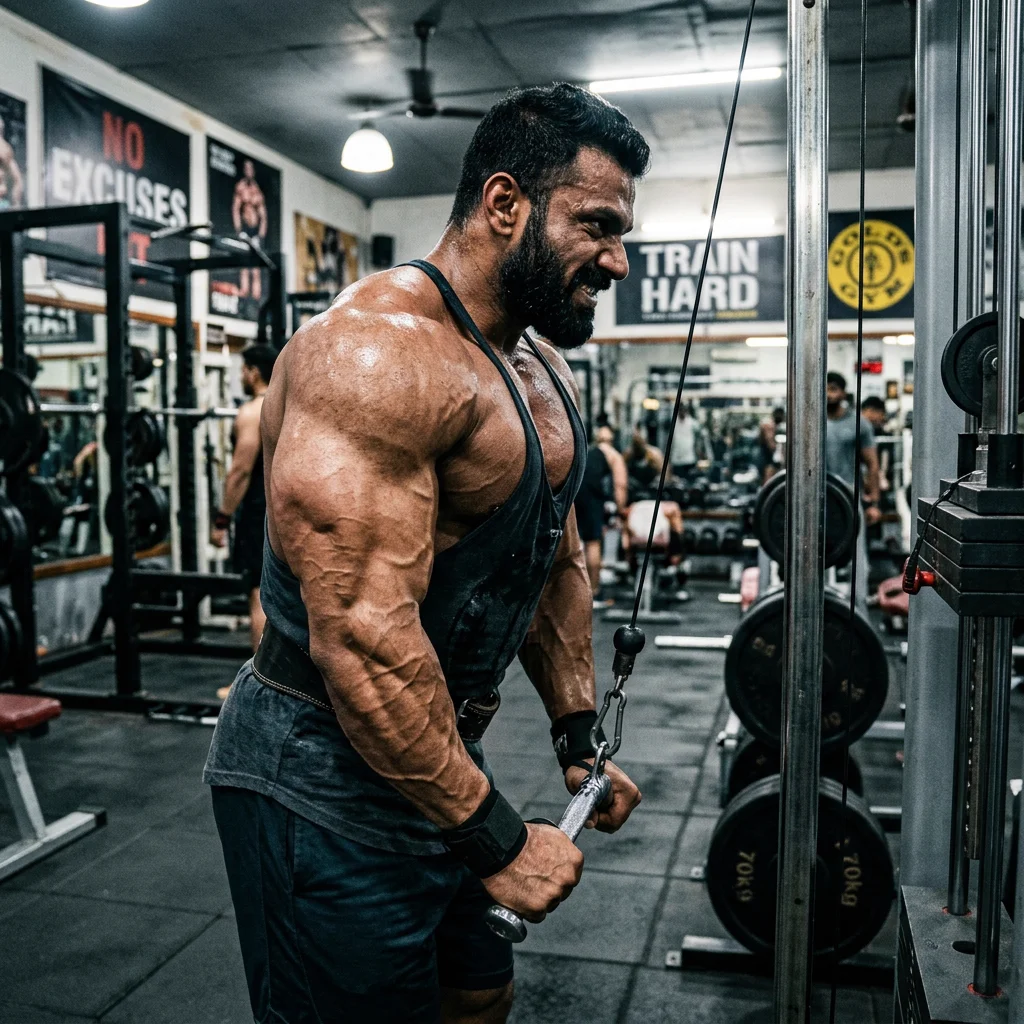
Begin with 60 seconds of jumping jacks or high knees to elevate heart rate and increase oxygenated blood delivery to peripheral muscles. Follow this with 15 repetitions of arm circles forward and backward to mobilize the shoulder capsule and warm up the supraspinatus tendon. Next, execute 10 cat-cow spinal flexions on the floor to decompress the intervertebral discs and lubricate your thoracic spine.
Finish your warm-up routine with 12 deep bodyweight coscack squats or bodyweight lunges with a torso twist to open up tight hip flexors and stretch the hamstrings. When your joints feel fluid and your skin has a light sweat, your motor units are primed for maximum force output without mechanical breakdown.
Upper Body Push Module: Chest, Anterior Deltoids, and Triceps Mastery
Your pushing musculature consists of the pectoralis major, clavicular upper chest, anterior deltoids, and the three heads of the triceps brachii. To build a massive chest with a full body home workout without equipment, you must perform variations that target every fiber angle from decline to incline. We will utilize three staple exercises performed with strict form and zero momentum.
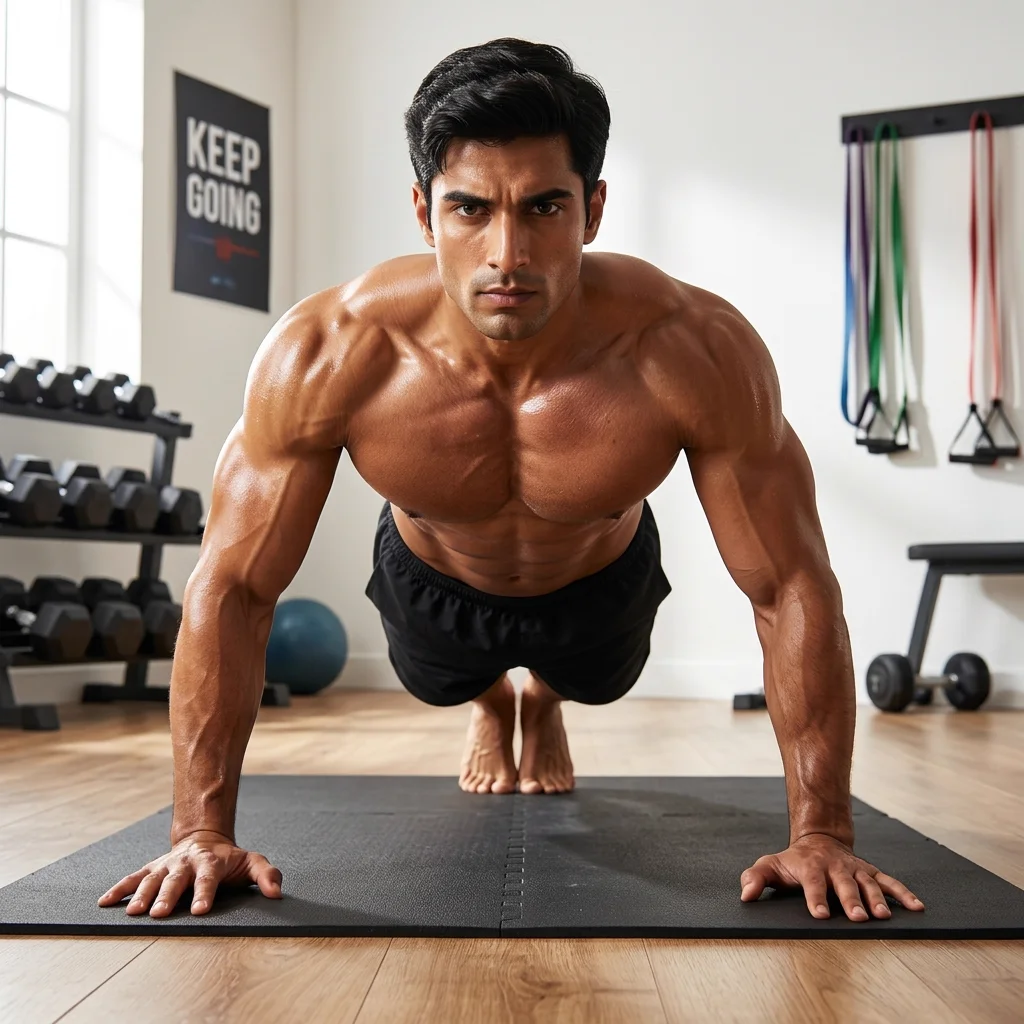
The primary movement is the Standard Floor Push-Up with hands placed shoulder-width apart and elbows tucked at a 45-degree angle to protect your shoulder joints. Lower your chest until it lightly touches the floor, pause for one second, and drive through the palms while flexing your chest hard at the top. Aim for 4 sets of 15 to 25 repetitions depending on your current strength level.
Next, move immediately into Decline Feet-Elevated Push-Ups by placing your toes on a bed or sturdy chair while keeping your hands on the floor. This exact angle shifts mechanical tension directly onto the stubborn upper clavicular chest fibers while giving your front shoulders a deep, growth-inducing stretch. Complete 3 sets of 12 to 15 reps, ensuring your lower back does not sag or arch.
To finish the push module and blast the triceps lateral and long heads, execute Diamond Push-Ups by forming a triangle shape with your thumbs and index fingers under your sternum. If full diamond push-ups are too challenging initially, perform them from your knees while maintaining a straight line from knees to crown. Perform 3 sets to absolute muscular failure, and feel the intense pump flooding the back of your arms.
Upper Body Pull Module: Lats, Rhomboids, Rear Deltoids, and Bicep Thickness
Building a wide V-taper back without a pull-up bar or barbells is one of the biggest challenges in home training, but it is completely achievable when using doorframe geometry and floor friction. The upper body pull module in our full body home workout without equipment focuses on retracting the scapula and engaging the latissimus dorsi to counteract desk-posture slumping. Every pulling rep must begin with a squeeze between your shoulder blades before your biceps bend.
Our foundational pulling exercise is the Doorframe Inverted Row, where you stand inside a sturdy doorway, grip the outer trim with your fingers at chest height, and lean your torso back until your arms are fully extended. Keep your body rigid like a plank, pull your chest toward the wooden frame using your upper back muscles, and squeeze hard for two seconds at peak contraction. Perform 4 sets of 15 strict repetitions while controlling the eccentric return phase.
Next, transition to the Prone Floor Cobra, an incredible exercise for rhomboids, lower trapezius, and rear deltoids that requires zero equipment. Lie face down on the floor with your legs straight, lift your chest two inches off the ground, and sweep your arms backward while rotating your thumbs toward the ceiling. Hold this isometric contraction for three full seconds on every repetition to strengthen the postural stabilizers along your spine for 3 sets of 12 reps.
To directly target the biceps brachii and brachialis without dumbbells, execute the Self-Resistance Towel Curl by wrapping a thick bath towel under your right foot while holding both ends in your hands. Stand upright and curl the towel upward toward your chin while pressing your foot downward against the towel to create maximum isometric tension throughout the curl range. Perform 3 sets of 45 seconds of continuous tension per leg to simulate heavy barbell curls.
Lower Body Power Module: Quadriceps, Hamstrings, Glutes, and Calves
Your legs contain over 50 percent of your total muscle mass, making lower body training the absolute engine of metabolic fat loss and natural testosterone production. A powerful full body home workout without equipment must challenge the quadriceps through full knee flexion while loading the gluteus maximus through explosive hip extension. Never skip leg day if you want a balanced, athletic, and highly functional physique.
We kick off the lower body module with the Bulgarian Split Squat, which is universally recognized by coaches as one of the most potent leg builders on the planet. Place the laces of your rear foot on a sofa or chair, step forward with your working leg, and descend until your rear knee lightly brushes the floor while your front thigh reaches parallel. Drive through your front heel to ascend, completing 4 sets of 12 strict repetitions per leg without resting between legs.
Follow up with the Bodyweight Deep Air Squat performed with a 3-second descent to maximize tension across your teardrop vastus medialis and hamstrings. Keep your chest tall, drive your knees outward over your toes, and drop into a deep Asian squat below parallel before exploding upward with dynamic speed. Perform 4 sets of 25 rapid-fire reps until your thighs burn with lactic acid.

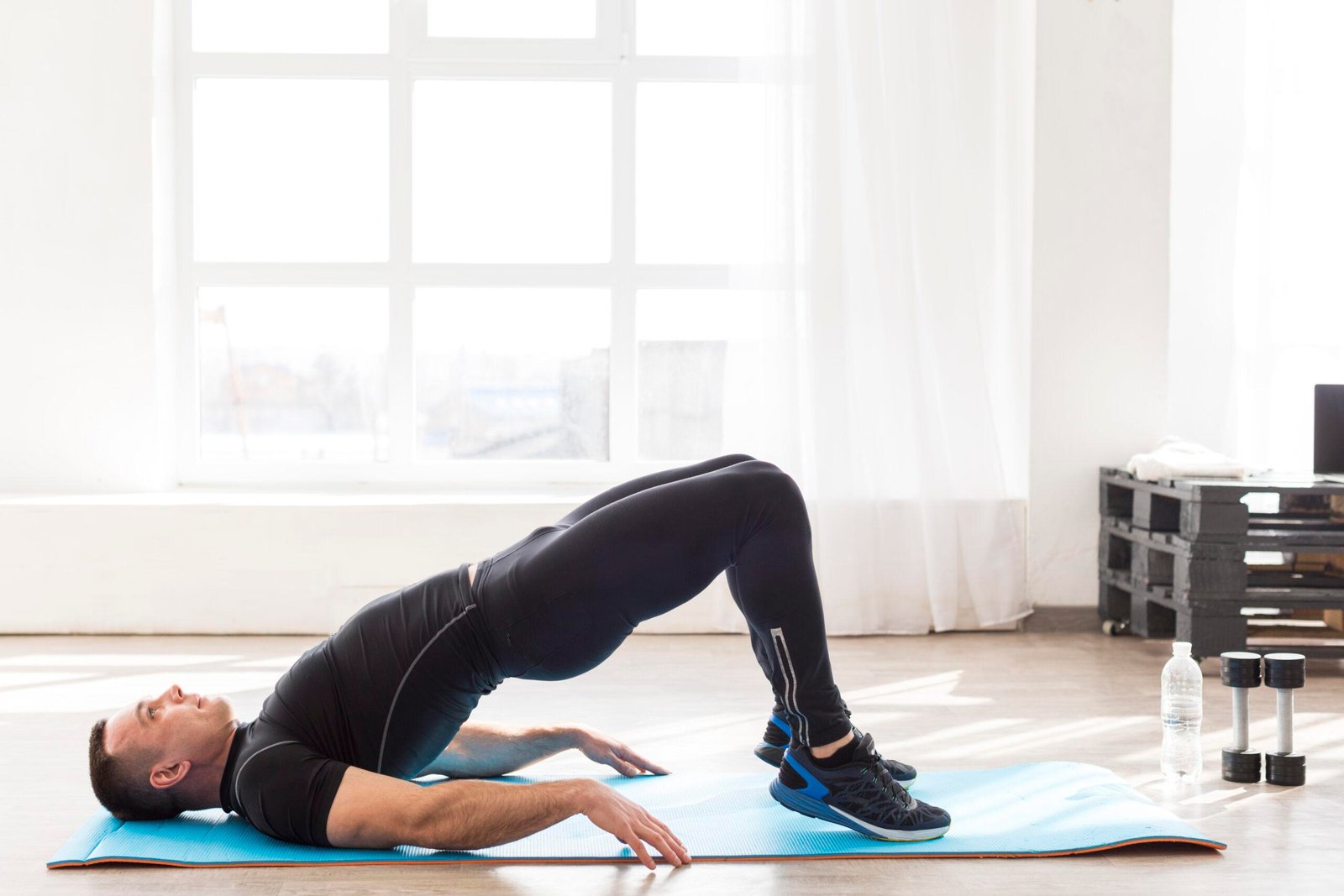
To ensure your posterior chain receives equal stimulation and your lower back stays pain-free, execute Single-Leg Floor Glute Bridges. Lie on your back with one foot planted firmly on the floor and the other leg extended straight into the air while driving your hips upward until your torso and thigh form a straight bridge. Squeeze your glutes intensely at the top for two seconds, completing 3 sets of 15 repetitions per leg.
Finally, finish off your lower limbs with Single-Leg Standing Calf Raises on the edge of a staircase step or thick book. Lower your heel as deep as possible to stretch the gastrocnemius tendon, then rise onto your big toe and pause for a peak contraction. Complete 4 sets of 20 reps per leg to develop diamond-shaped, athletic calves right at home.
Core & Abdominal Shredding Module: Building Six-Pack Abs and Core Stability
Building a sharp six-pack is not just about doing endless sit-ups that compress your lumbar discs; it requires stabilizing the spine through anti-extension and rotational resistance. Our core module in this full body home workout without equipment targets the rectus abdominis, deep transverse abdominis, and external obliques for complete midsection hardening. Strong abdominal wall stabilizers are the foundation of athletic power across every daily movement.
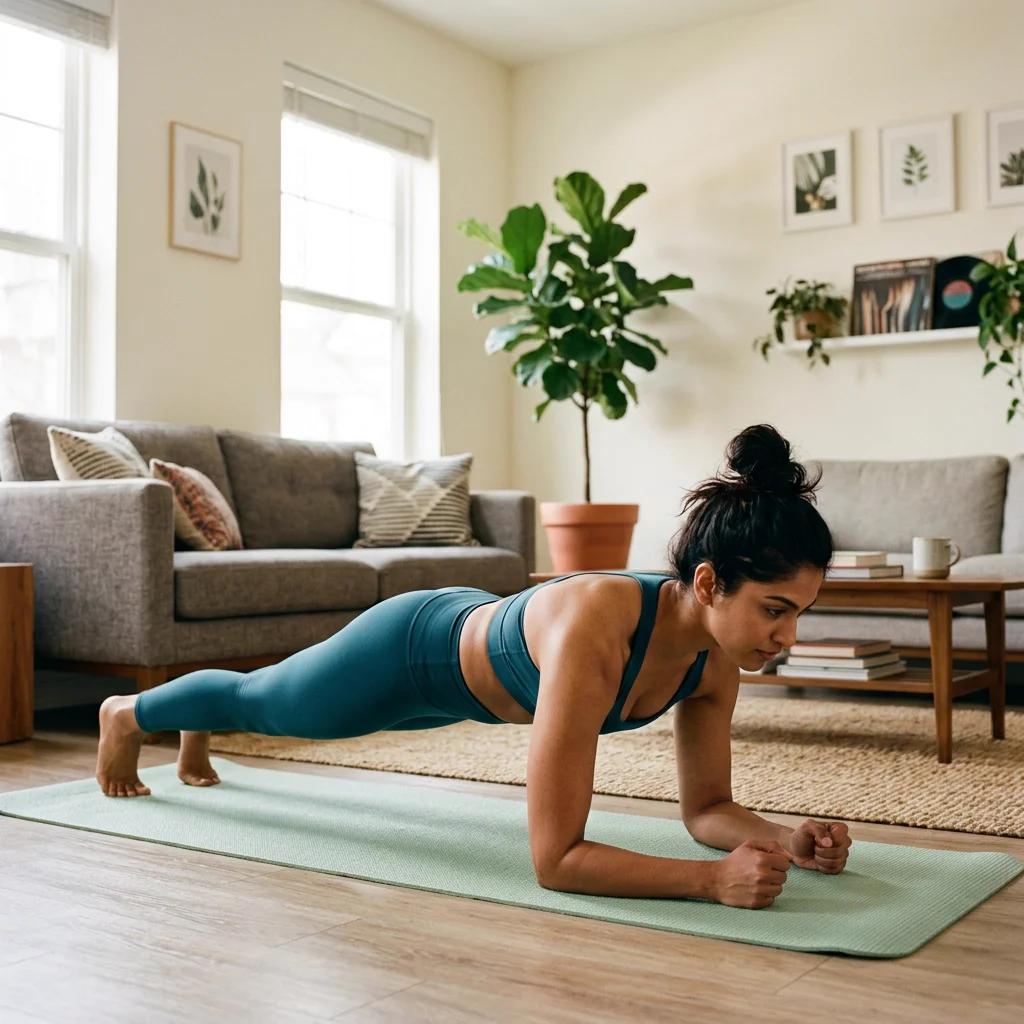
Start with the Hollow-Body Floor Hold, a foundational gymnast exercise that eliminates anterior pelvic tilt and pulls your belly button inward for a flat stomach. Lie on your back, press your lower spine firmly against the carpet, and lift your extended legs and arms six inches off the ground while bracing your core like you are about to take a punch. Hold this intense isometric tension for 4 sets of 45 to 60 seconds each.
Next, transition directly into Alternating Bicycle Crunches to slice through visceral belly fat and carve out deep intercostal obliques. Place your fingertips behind your ears without pulling on your neck, rotate your right elbow toward your left knee while extending your right leg straight out, and alternate sides smoothly. Perform 3 sets of 30 total repetitions with controlled, deliberate torso twisting.
Complete the abdominal circuit with High-Intensity Mountain Climbers to spike your metabolic burn while keeping your shoulders and core locked in a plank position. Drive your knees alternately toward your chest as fast as possible without letting your hips bounce upward into the air. Run through 4 sets of 45 seconds to incinerate calories and finish your strength session with a cardio surge.

The Complete 30-Minute Full-Body Routine (Sets, Reps & Rest Table)
To make your training structured and crystal clear, I have designed the exact weekly blueprint for your full body home workout without equipment. Perform this entire routine 3 to 4 days per week (for example: Monday, Wednesday, Friday, and Saturday) with at least 24 hours of rest between sessions for optimal recovery. Follow the exact prescribed sets, repetitions, and rest intervals shown in the master table below.
| Muscle Group / Module | Exercise Name | Sets x Repetitions | Tempo (Down/Pause/Up) | Rest Interval |
|---|---|---|---|---|
| Upper Push (Chest/Triceps) | Standard Floor Push-Ups | 4 sets x 15-25 reps | 2 sec / 1 sec / 1 sec | 60 seconds |
| Upper Push (Upper Chest) | Decline Feet-Elevated Push-Ups | 3 sets x 12-15 reps | 3 sec / 1 sec / 1 sec | 60 seconds |
| Upper Push (Triceps Isolation) | Diamond Floor Push-Ups | 3 sets to Failure | 2 sec / 0 sec / 1 sec | 45 seconds |
| Upper Pull (Lats/Upper Back) | Doorframe Inverted Rows | 4 sets x 15 reps | 2 sec / 2 sec / 1 sec | 60 seconds |
| Upper Pull (Rhomboids/Traps) | Prone Floor Cobras | 3 sets x 12 reps (3s hold) | 1 sec / 3 sec / 1 sec | 45 seconds |
| Lower Power (Quads/Glutes) | Bulgarian Split Squats | 4 sets x 12 reps per leg | 3 sec / 1 sec / 1 sec | 60 seconds |
| Lower Power (Hamstrings/Hips) | Single-Leg Floor Glute Bridges | 3 sets x 15 reps per leg | 2 sec / 2 sec / 1 sec | 45 seconds |
| Lower Power (Calves) | Staircase Single-Leg Calf Raises | 4 sets x 20 reps per leg | 2 sec / 1 sec / 1 sec | 45 seconds |
| Core & Abs (Deep Transverse) | Hollow-Body Floor Hold | 4 sets x 45-60 seconds | Isometric Hold | 45 seconds |
| Core & Abs (Obliques/HIIT) | Mountain Climbers Burnout | 4 sets x 45 seconds | Fast Dynamic Pace | 45 seconds |
Indian Diet Plan to Support Your Home Workout Muscle Growth
No matter how hard you push yourself during a full body home workout without equipment, you will never build muscle or lose belly fat if your nutrition is filled with refined sugar and empty calories. Indian households often struggle with low protein intake due to high carb diets centered around polished rice and wheat rotis. As a sports nutritionist, I recommend consuming at least 1.6 to 2.2 grams of protein per kilogram of body weight daily to repair muscle micro-tears.
For our vegetarian brothers and sisters, high-value protein sources include soya chunks (nutrela), paneer (cottage cheese), hung curd (Greek yogurt), sattu powder, yellow moong dal, and roasted chana. If you consume eggs and non-vegetarian foods, make boiled egg whites, chicken breast, and local river fish your daily dietary staples alongside complex carbohydrates. Divide your daily food intake into four balanced meals spaced four hours apart to keep your blood glucose stable and muscle repair running around the clock.
Here is a sample budget-friendly Indian muscle-building meal schedule: Start your morning with a sattu protein shake (50g sattu, roasted cumin, black salt, and lemon juice) plus two boiled eggs or 100g paneer bhurji. For lunch, eat two multigrain rotis, one large bowl of thick dal tadka, 50 grams of boiled soya chunks curry, and a fresh cucumber-carrot salad. Post-workout, consume one scoop of whey protein (or 200g curd with bananas and almonds), and finish your dinner with grilled chicken breast or dal palak with a small portion of brown rice.
Common Home Workout Mistakes That Ruin Your Progress and Joints
Even motivated lifters often sabotage their results when executing a full body home workout without equipment due to five widespread mechanical errors. First and foremost is using half-repetitions or bouncing at the bottom of squats and push-ups just to inflate your rep count on paper. Always train through a full, uncompromised range of motion so every muscle fiber from origin to insertion experiences mechanical stimulation.
Second, flaring your elbows outward at a 90-degree angle during push-ups places immense shearing stress on the glenohumeral joint and leads to rotator cuff inflammation. Always keep your elbows tucked at approximately 45 degrees relative to your ribs. Third, holding your breath during heavy isometric contractions spikes internal blood pressure and causes dizziness; remember to exhale forcefully on the exertion (pushing/pulling) phase and inhale deeply on the negative phase.
Fourth, neglecting sleep and hydration will stop your natural growth hormone secretion dead in its tracks. You grow while sleeping during deep slow-wave REM cycles, not while training; aim for seven to eight uninterrupted hours every single night while drinking three to four liters of clean water daily. Finally, skipping cool-down stretches leaves your muscle fascia tight and restricted, increasing post-workout soreness (DOMS) and lowering athletic flexibility.
Full-body Home Workout – Frequently Asked Questions (FAQs) About No-Equipment Training
1. Can you really build serious muscle mass without gym weights?
Yes, absolutely. Muscle fibers do not have eyes; they respond strictly to mechanical tension, progressive overload, and metabolic fatigue. By using advanced bodyweight techniques such as leverage manipulation, slow eccentric tempos, and short rest intervals, you can build incredible muscle density and strength without lifting heavy gym iron.
2. How many days a week should I do a full body home workout without equipment?
For most beginners and intermediate fitness enthusiasts, training three to four alternate days per week (such as Monday, Wednesday, Friday, and Saturday) is the sweet spot. This allows your muscles 24 to 48 hours of critical recovery time between sessions to rebuild protein structures while keeping your metabolism elevated all week long.
3. How long does it take to see visible belly fat loss with this home routine?
If you strictly follow this high-intensity 30-minute home workout combined with a caloric deficit and our recommended Indian high-protein diet, you will notice increased muscle hardness within two weeks. Visible reduction in waist measurements and lower belly fat typically becomes dramatic between days 30 and 60 of consistent adherence.
4. Is this workout routine safe for individuals with mild knee or lower back stiffness?
Yes, provided you execute the mandatory 5-minute warm-up and maintain a neutral spine without excessive lower back arching during squats and push-ups. If you experience knee discomfort during deep squats, reduce your depth to 90 degrees and focus on strengthening your glutes and hamstrings first using single-leg floor glute bridges.
Conclusion: Start Your 90-Day Home Transformation Today
Transforming your body does not require a luxury gym membership, expensive fitness gadgets, or complicated training gear. When you commit to this evidence-based full body home workout without equipment, you harness the raw mechanical efficiency of your own body weight to sculpt lean muscle, incinerate body fat, and build lasting functional athleticism. Master the technique of each exercise, stay consistent with your weekly routine, and fuel your body with clean, high-protein Indian nutrition.
Stop waiting for the perfect moment or the right fitness equipment to begin your journey. Clear a six-foot space in your bedroom, set your timer, and execute your first session today. For more science-backed workout routines, diet charts, and bodybuilding guides tailored for Indian fitness enthusiasts, make sure to explore our complete fitness library right here on MusclesBurner Workouts and take charge of your health right now!