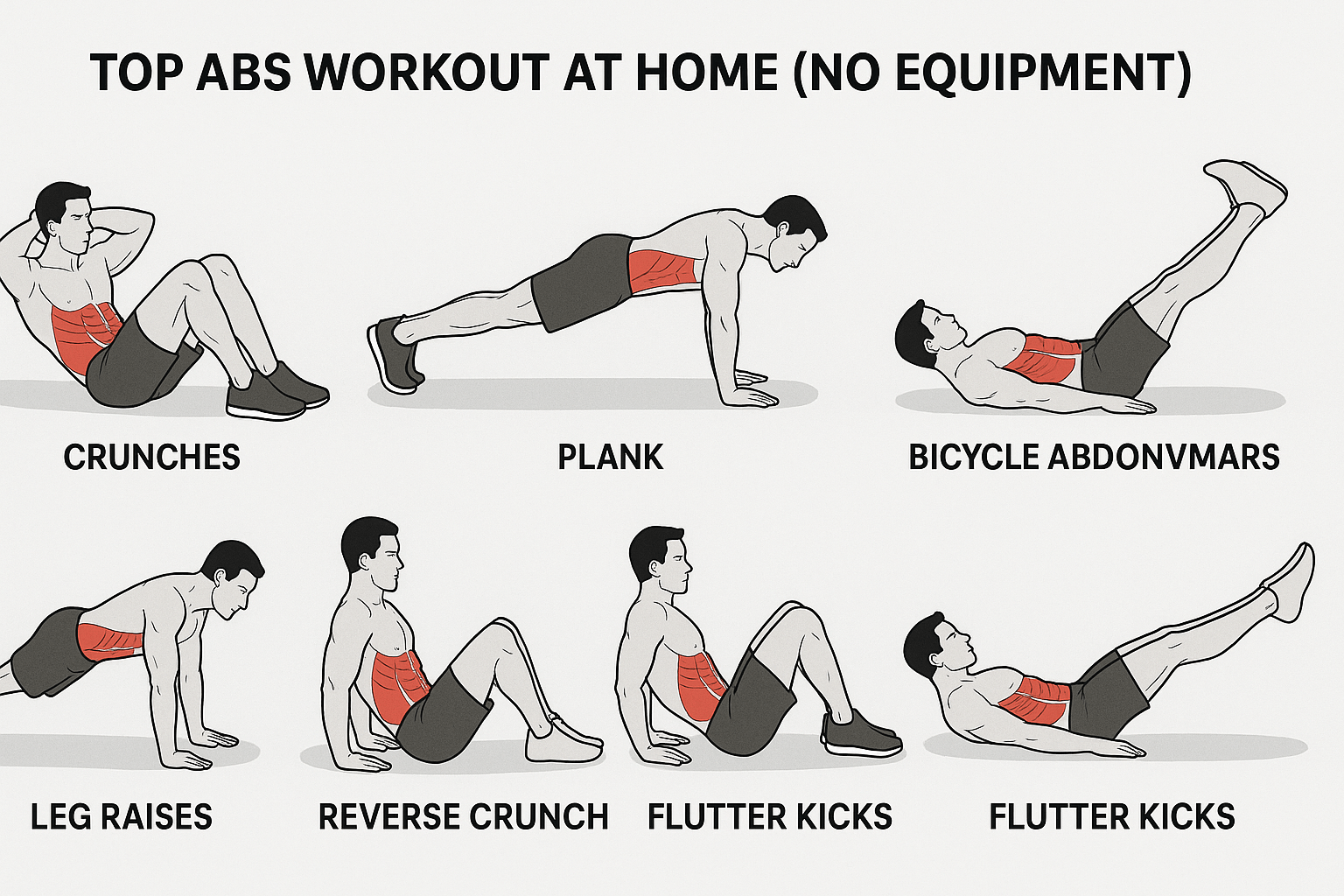

Mastering core amp lower is essential for achieving peak physical transformation. Walk into any fitness center or observe home workout challenges online, and you will witness millions of exercisers obsessively performing endless sets of sit-ups, crunches, and leg raises in pursuit of a chiseled six-pack abdomen. Yet an alarming percentage of these abdominal enthusiasts suffer from chronic, nagging lower back pain, posture degradation, and spinal disc instability. The fundamental biomechanical error destroying their spinal health is a complete misunderstanding of what the human ‘core’ actually is. Your core is not just your Rectus Abdominis (the front six-pack muscle); it is a three-dimensional, 360-degree muscular cylinder surrounding your lumbar vertebrae. When you aggressively strengthen and tighten only the front wall of this cylinder with daily crunches while leaving the back wall (the Erector Spinae and Multifidus) and side walls (the Obliques and Quadratus Lumborum) weak and neglected, you create a catastrophic structural imbalance. The tight front six-pack pulls your ribcage downward into chronic spinal flexion, compressing your intervertebral discs and pushing your vertebrae straight out the back. To build true, functional core strength and bulletproof spinal stability at home, you must abandon isolation crunches and master 360-Degree Core & Lower Back Co-Activation.
Mastering core lower back balance requires an uncompromising commitment to understanding human spinal biomechanics, optimal stabilization protocols, and evidence-based nutritional strategies. Many home fitness enthusiasts fall victim to commercial shortcuts or misleading advice, yet the actual biological pathways governing spinal health and erector spinae development follow precise scientific rules that, when understood and applied correctly, produce extraordinary and lasting results.
Throughout this comprehensive guide on core lower back balance, we will dismantle prevalent fitness myths and provide you with an actionable, step-by-step framework tailored specifically for the Indian lifestyle. Whether your goal is to build massive lumbar strength, fix postural imbalances, overcome chronic lower back pain, or prevent spinal disc herniations, every single instruction detailed below is backed by clinical research and proven orthopedic rehabilitation protocols used by elite physical therapists.
Before initiating any intensive protocol for core lower back balance, it is essential to establish baseline spinal stability metrics and eliminate daily ergonomic habits that actively compress your intervertebral discs. By combining strict anti-inflammatory nutritional saturation, consistent core-activation routines, and optimized decompression recovery practices, you empower your lower back to express its maximum genetic strength and endurance without risk of injury or chronic pain.
Core Amp Lower: The 360-Degree Guy-Wire Cylinder: Anatomy of True Core Balance
To understand why training abs alone destabilizes your spine, you must visualize your lower back vertebrae as a tall radio broadcast tower standing on a concrete pad. To keep that tower standing perfectly straight against heavy winds, structural engineers attach heavy steel guy-wires pulling down equally from all four directions: north, south, east, and west. If the north guy-wire is pulled tight while the south guy-wire is left loose and slack, the entire tower will bend and snap toward the north.
Your lumbar spine operates across the exact same physics. The Front Wall (North) is your Rectus Abdominis and Transverse Abdominis; the Back Wall (South) is your Erector Spinae and deep Multifidus; the Side Walls (East & West) are your Internal/External Obliques and Quadratus Lumborum (QL). When you perform 200 crunches daily, you pull the front north wire dangerously tight, snapping your spinal vertebrae forward into flexion and transferring destructive shearing loads across your lower back disc pads. True spinal stability requires Co-Activation — training all four walls of the cylinder simultaneously so they contract with equal, balanced stiffness.

The 4-Wall Radio Tower Guy-Wire Physics
To fully execute The 4-Wall Radio Tower Guy-Wire Physics effectively, you must maintain uncompromised technical discipline and understand the underlying orthopedic mechanism. Why your front abs, rear erectors, and side obliques must pull with identical resting tone to keep your spinal vertebrae vertical. When executed consistently over a 60-to-90-day training cycle, this specific protocol forces profound spinal adaptation, strengthening the deep multifidus and erector spinae fibers, improving intervertebral disc hydration, and enhancing neuromuscular core co-activation across the lumbar spine.
Furthermore, integrating The 4-Wall Radio Tower Guy-Wire Physics into your daily routine provides a direct protective shield against modern office-chair posture and chronic lower back fatigue. By focusing on progressive isometric endurance, strict spinal neutrality, and controlled hinging mechanics during core lower back balance, you eliminate common spinal bottlenecks and accelerate your body natural healing capacity. Ensure that every repetition or static hold is performed with abdominal bracing and full muscular control to capture 100% of the biomechanical benefits.
How Front-Ab Dominance Snaps Spinal Discs Backward
To fully execute How Front-Ab Dominance Snaps Spinal Discs Backward effectively, you must maintain uncompromised technical discipline and understand the underlying orthopedic mechanism. Understanding how tight six-pack muscles pull your ribcage toward your pelvis, crushing intervertebral discs out the back of your spine. When executed consistently over a 60-to-90-day training cycle, this specific protocol forces profound spinal adaptation, strengthening the deep multifidus and erector spinae fibers, improving intervertebral disc hydration, and enhancing neuromuscular core co-activation across the lumbar spine.
Furthermore, integrating How Front-Ab Dominance Snaps Spinal Discs Backward into your daily routine provides a direct protective shield against modern office-chair posture and chronic lower back fatigue. By focusing on progressive isometric endurance, strict spinal neutrality, and controlled hinging mechanics during core lower back balance, you eliminate common spinal bottlenecks and accelerate your body natural healing capacity. Ensure that every repetition or static hold is performed with abdominal bracing and full muscular control to capture 100% of the biomechanical benefits.
The Transverse Abdominis 360-Degree Biological Corset
To fully execute The Transverse Abdominis 360-Degree Biological Corset effectively, you must maintain uncompromised technical discipline and understand the underlying orthopedic mechanism. How your deepest core muscle wraps all the way around your torso like a weightlifting belt to stabilize your lumbar spine from every angle. When executed consistently over a 60-to-90-day training cycle, this specific protocol forces profound spinal adaptation, strengthening the deep multifidus and erector spinae fibers, improving intervertebral disc hydration, and enhancing neuromuscular core co-activation across the lumbar spine.
Furthermore, integrating The Transverse Abdominis 360-Degree Biological Corset into your daily routine provides a direct protective shield against modern office-chair posture and chronic lower back fatigue. By focusing on progressive isometric endurance, strict spinal neutrality, and controlled hinging mechanics during core lower back balance, you eliminate common spinal bottlenecks and accelerate your body natural healing capacity. Ensure that every repetition or static hold is performed with abdominal bracing and full muscular control to capture 100% of the biomechanical benefits.
Abdominal Bracing vs. Abdominal Hollowing: The Core Locking Secret
For decades, outdated fitness advice and pilates classes instructed athletes to perform ‘Abdominal Hollowing’ — sucking your belly button straight backward toward your spine while lifting weights or holding planks. Clinical spinal research by Dr. Stuart McGill proved that abdominal hollowing is orthopedically dangerous when lifting or stabilizing the spine. Sucking your belly inward narrows the diameter of your torso cylinder and completely shuts down your oblique and quadratus lumborum side walls, reducing spinal stability by over 40 percent.
To lock your 360-degree spinal cylinder into an immovable, bulletproof fortress during exercise or heavy lifting, you must execute ‘Abdominal Bracing’. Squeeze and push your abdominal wall outward all the way around your torso — front, sides, and lower back — as if someone is about to punch you hard in the stomach. Feel how bracing engages your obliques, your front six-pack, and your lower back erectors simultaneously, turning your entire middle torso into a rigid, pressurized pneumatic cylinder that protects every single vertebra from moving or slipping.

Why Sucking In Your Stomach (‘Hollowing’) Destroys Core Balance
To fully execute Why Sucking In Your Stomach (‘Hollowing’) Destroys Core Balance effectively, you must maintain uncompromised technical discipline and understand the underlying orthopedic mechanism. How narrowing your torso diameter shuts down oblique stabilization and leaves your lumbar vertebrae vulnerable to twisting injury. When executed consistently over a 60-to-90-day training cycle, this specific protocol forces profound spinal adaptation, strengthening the deep multifidus and erector spinae fibers, improving intervertebral disc hydration, and enhancing neuromuscular core co-activation across the lumbar spine.
Furthermore, integrating Why Sucking In Your Stomach (‘Hollowing’) Destroys Core Balance into your daily routine provides a direct protective shield against modern office-chair posture and chronic lower back fatigue. By focusing on progressive isometric endurance, strict spinal neutrality, and controlled hinging mechanics during core lower back balance, you eliminate common spinal bottlenecks and accelerate your body natural healing capacity. Ensure that every repetition or static hold is performed with abdominal bracing and full muscular control to capture 100% of the biomechanical benefits.
The Pneumatic Cylinder Punch-Defense Bracing Technique
To fully execute The Pneumatic Cylinder Punch-Defense Bracing Technique effectively, you must maintain uncompromised technical discipline and understand the underlying orthopedic mechanism. Pushing your abdominal wall outward in 360 degrees to engage front abs, side obliques, and rear erectors simultaneously. When executed consistently over a 60-to-90-day training cycle, this specific protocol forces profound spinal adaptation, strengthening the deep multifidus and erector spinae fibers, improving intervertebral disc hydration, and enhancing neuromuscular core co-activation across the lumbar spine.
Furthermore, integrating The Pneumatic Cylinder Punch-Defense Bracing Technique into your daily routine provides a direct protective shield against modern office-chair posture and chronic lower back fatigue. By focusing on progressive isometric endurance, strict spinal neutrality, and controlled hinging mechanics during core lower back balance, you eliminate common spinal bottlenecks and accelerate your body natural healing capacity. Ensure that every repetition or static hold is performed with abdominal bracing and full muscular control to capture 100% of the biomechanical benefits.
Intra-Abdominal Pressure (IAP) Hydraulic Cushioning
To fully execute Intra-Abdominal Pressure (IAP) Hydraulic Cushioning effectively, you must maintain uncompromised technical discipline and understand the underlying orthopedic mechanism. How 360-degree bracing traps air inside your abdominal cavity to create a hydraulic fluid cushion supporting your lower back from the front. When executed consistently over a 60-to-90-day training cycle, this specific protocol forces profound spinal adaptation, strengthening the deep multifidus and erector spinae fibers, improving intervertebral disc hydration, and enhancing neuromuscular core co-activation across the lumbar spine.
Furthermore, integrating Intra-Abdominal Pressure (IAP) Hydraulic Cushioning into your daily routine provides a direct protective shield against modern office-chair posture and chronic lower back fatigue. By focusing on progressive isometric endurance, strict spinal neutrality, and controlled hinging mechanics during core lower back balance, you eliminate common spinal bottlenecks and accelerate your body natural healing capacity. Ensure that every repetition or static hold is performed with abdominal bracing and full muscular control to capture 100% of the biomechanical benefits.
The Co-Activation Trinity: Bird-Dog, Dead Bug & Suitcase Carry
To replace harmful isolation crunches with functional, 360-degree spinal co-activation at home, your training must center on the Co-Activation Trinity: three movements that force your front abs, rear lower back erectors, and side obliques to fire in perfect neuromuscular harmony without rounding your spine.
Movement 1 (The Strict McGill Bird-Dog): kneeling on hands and knees, extend your right arm forward and left leg backward while bracing your core cylinder rigid for a 10-second hold. This forces your rear multifidus and front transverse abdominis to co-contract. Movement 2 (The Anti-Extension Dead Bug): lie flat on your back across your mat, lift arms straight toward the ceiling, and bend knees at 90 degrees directly over your hips. Flatten your lower back firmly into the carpet. Bracing your core, slowly extend your right arm backward over your head and your left leg straight out toward the floor until both hover 2 inches off the carpet, holding for 3 seconds before returning to center. Movement 3 (The Suitcase Carry): pick up a heavy 15-to-20 liter water bottle in ONE hand only and walk slowly with a tall, rigid posture across your living room for 60 seconds — your opposite side obliques and QL must co-activate with your lower back to keep your spine from bending sideways.

Quadruped Bird-Dog Diagonal Co-Activation
To fully execute Quadruped Bird-Dog Diagonal Co-Activation effectively, you must maintain uncompromised technical discipline and understand the underlying orthopedic mechanism. Extending opposite arm and leg to force front transverse abdominis and rear multifidus fibers to fire in synchronized harmony. When executed consistently over a 60-to-90-day training cycle, this specific protocol forces profound spinal adaptation, strengthening the deep multifidus and erector spinae fibers, improving intervertebral disc hydration, and enhancing neuromuscular core co-activation across the lumbar spine.
Furthermore, integrating Quadruped Bird-Dog Diagonal Co-Activation into your daily routine provides a direct protective shield against modern office-chair posture and chronic lower back fatigue. By focusing on progressive isometric endurance, strict spinal neutrality, and controlled hinging mechanics during core lower back balance, you eliminate common spinal bottlenecks and accelerate your body natural healing capacity. Ensure that every repetition or static hold is performed with abdominal bracing and full muscular control to capture 100% of the biomechanical benefits.
Supine Dead Bug Anti-Extension Pelvic Locking
To fully execute Supine Dead Bug Anti-Extension Pelvic Locking effectively, you must maintain uncompromised technical discipline and understand the underlying orthopedic mechanism. Lowering opposite arm and leg while lying on your back to force your six-pack abs to prevent your lower back from arching off the floor. When executed consistently over a 60-to-90-day training cycle, this specific protocol forces profound spinal adaptation, strengthening the deep multifidus and erector spinae fibers, improving intervertebral disc hydration, and enhancing neuromuscular core co-activation across the lumbar spine.
Furthermore, integrating Supine Dead Bug Anti-Extension Pelvic Locking into your daily routine provides a direct protective shield against modern office-chair posture and chronic lower back fatigue. By focusing on progressive isometric endurance, strict spinal neutrality, and controlled hinging mechanics during core lower back balance, you eliminate common spinal bottlenecks and accelerate your body natural healing capacity. Ensure that every repetition or static hold is performed with abdominal bracing and full muscular control to capture 100% of the biomechanical benefits.
Single-Handed Suitcase Carry Lateral Anti-Flexion
To fully execute Single-Handed Suitcase Carry Lateral Anti-Flexion effectively, you must maintain uncompromised technical discipline and understand the underlying orthopedic mechanism. Walking with a heavy water jug in one hand to overload your opposite side obliques and QL armor. When executed consistently over a 60-to-90-day training cycle, this specific protocol forces profound spinal adaptation, strengthening the deep multifidus and erector spinae fibers, improving intervertebral disc hydration, and enhancing neuromuscular core co-activation across the lumbar spine.
Furthermore, integrating Single-Handed Suitcase Carry Lateral Anti-Flexion into your daily routine provides a direct protective shield against modern office-chair posture and chronic lower back fatigue. By focusing on progressive isometric endurance, strict spinal neutrality, and controlled hinging mechanics during core lower back balance, you eliminate common spinal bottlenecks and accelerate your body natural healing capacity. Ensure that every repetition or static hold is performed with abdominal bracing and full muscular control to capture 100% of the biomechanical benefits.
The 1-to-1 Balanced Programming Rule: Matching Extension to Flexion
To ensure that your core cylinder remains orthopedically balanced for life, you must strictly enforce the 1-to-1 Balanced Programming Rule across every single home workout. Never again allow your front abdominal volume to outnumber your posterior lower back and oblique volume.
If your workout includes 3 sets of 45-second Front Planks (anterior six-pack hold), you must immediately balance that volume by executing 3 sets of 45-second Prone Cobra or Superman Holds (posterior erector spinae hold), AND 3 sets of 45-second Side Planks per side (lateral oblique hold). By maintaining this exact 1-to-1-to-1 volume ratio across anterior, posterior, and lateral vectors, your spinal vertebrae remain centered in a neutral, friction-free joint socket, eliminating posture degradation and chronic back aches forever.

The 1-to-1-to-1 Anterior-Posterior-Lateral Ratio
To fully execute The 1-to-1-to-1 Anterior-Posterior-Lateral Ratio effectively, you must maintain uncompromised technical discipline and understand the underlying orthopedic mechanism. Matching every set of front planks or dead bugs with equal sets of lower back supermans and side planks for symmetrical posture. When executed consistently over a 60-to-90-day training cycle, this specific protocol forces profound spinal adaptation, strengthening the deep multifidus and erector spinae fibers, improving intervertebral disc hydration, and enhancing neuromuscular core co-activation across the lumbar spine.
Furthermore, integrating The 1-to-1-to-1 Anterior-Posterior-Lateral Ratio into your daily routine provides a direct protective shield against modern office-chair posture and chronic lower back fatigue. By focusing on progressive isometric endurance, strict spinal neutrality, and controlled hinging mechanics during core lower back balance, you eliminate common spinal bottlenecks and accelerate your body natural healing capacity. Ensure that every repetition or static hold is performed with abdominal bracing and full muscular control to capture 100% of the biomechanical benefits.
Eliminating Flexion-Only Workout Junk Volume
To fully execute Eliminating Flexion-Only Workout Junk Volume effectively, you must maintain uncompromised technical discipline and understand the underlying orthopedic mechanism. Cutting out endless sit-ups and crunches that compress intervertebral discs without improving real-world spinal stabilization. When executed consistently over a 60-to-90-day training cycle, this specific protocol forces profound spinal adaptation, strengthening the deep multifidus and erector spinae fibers, improving intervertebral disc hydration, and enhancing neuromuscular core co-activation across the lumbar spine.
Furthermore, integrating Eliminating Flexion-Only Workout Junk Volume into your daily routine provides a direct protective shield against modern office-chair posture and chronic lower back fatigue. By focusing on progressive isometric endurance, strict spinal neutrality, and controlled hinging mechanics during core lower back balance, you eliminate common spinal bottlenecks and accelerate your body natural healing capacity. Ensure that every repetition or static hold is performed with abdominal bracing and full muscular control to capture 100% of the biomechanical benefits.
Postural Assessment Check in a Bedroom Mirror
To fully execute Postural Assessment Check in a Bedroom Mirror effectively, you must maintain uncompromised technical discipline and understand the underlying orthopedic mechanism. Standing sideways before a mirror weekly to verify that your earbone, shoulder, hip bone, and ankle align in a perfectly straight vertical line. When executed consistently over a 60-to-90-day training cycle, this specific protocol forces profound spinal adaptation, strengthening the deep multifidus and erector spinae fibers, improving intervertebral disc hydration, and enhancing neuromuscular core co-activation across the lumbar spine.
Furthermore, integrating Postural Assessment Check in a Bedroom Mirror into your daily routine provides a direct protective shield against modern office-chair posture and chronic lower back fatigue. By focusing on progressive isometric endurance, strict spinal neutrality, and controlled hinging mechanics during core lower back balance, you eliminate common spinal bottlenecks and accelerate your body natural healing capacity. Ensure that every repetition or static hold is performed with abdominal bracing and full muscular control to capture 100% of the biomechanical benefits.
The Complete 30-Minute 360-Degree Core & Spine Balance Routine
To build an impenetrable, balanced core cylinder right on your bedroom floor without crunches or sit-ups, perform this complete 30-minute co-activation routine exactly 3 days per week (for example, Monday, Wednesday, and Friday). You will need your yoga mat and one heavy water jug.
Master Routine Flow: Phase 1 (Core Cylinder Bracing Mastery): 3 minutes of practicing 360-degree punch-defense abdominal bracing while breathing deeply (rest 30s); Phase 2 (The Co-Activation Trinity): Exercise 1: Strict Quadruped Bird-Dogs — 4 sets of 6 descending pyramid 10-second holds per diagonal side (rest 60s); Exercise 2: Strict Anti-Extension Dead Bugs — 4 sets of 10 slow alternating diagonal repetitions holding 3 seconds at extension (rest 60s); Exercise 3: Single-Handed Suitcase Carries holding 15kg water jug — 3 continuous 60-second walking sets per arm (rest 60s); Phase 3 (The 1-to-1 Balanced Isometric Finisher): 3 rounds of 45s Front Plank + 45s Strict Floor Superman + 45s Side Plank (left) + 45s Side Plank (right) resting 60s between rounds. Your torso will feel like an indestructible steel cylinder.
Chronological Bracing-to-Trinity-to-Balanced Finisher Flow
To fully execute Chronological Bracing-to-Trinity-to-Balanced Finisher Flow effectively, you must maintain uncompromised technical discipline and understand the underlying orthopedic mechanism. Engaging pneumatic bracing first, executing diagonal co-activation second, and finishing with 360-degree balanced isometrics. When executed consistently over a 60-to-90-day training cycle, this specific protocol forces profound spinal adaptation, strengthening the deep multifidus and erector spinae fibers, improving intervertebral disc hydration, and enhancing neuromuscular core co-activation across the lumbar spine.
Furthermore, integrating Chronological Bracing-to-Trinity-to-Balanced Finisher Flow into your daily routine provides a direct protective shield against modern office-chair posture and chronic lower back fatigue. By focusing on progressive isometric endurance, strict spinal neutrality, and controlled hinging mechanics during core lower back balance, you eliminate common spinal bottlenecks and accelerate your body natural healing capacity. Ensure that every repetition or static hold is performed with abdominal bracing and full muscular control to capture 100% of the biomechanical benefits.
Strict Diaphragmatic Breathing Under Bracing Tension
To fully execute Strict Diaphragmatic Breathing Under Bracing Tension effectively, you must maintain uncompromised technical discipline and understand the underlying orthopedic mechanism. Practicing continuous belly breathing through pursed lips while holding dead bugs and carries so you never hold your breath. When executed consistently over a 60-to-90-day training cycle, this specific protocol forces profound spinal adaptation, strengthening the deep multifidus and erector spinae fibers, improving intervertebral disc hydration, and enhancing neuromuscular core co-activation across the lumbar spine.
Furthermore, integrating Strict Diaphragmatic Breathing Under Bracing Tension into your daily routine provides a direct protective shield against modern office-chair posture and chronic lower back fatigue. By focusing on progressive isometric endurance, strict spinal neutrality, and controlled hinging mechanics during core lower back balance, you eliminate common spinal bottlenecks and accelerate your body natural healing capacity. Ensure that every repetition or static hold is performed with abdominal bracing and full muscular control to capture 100% of the biomechanical benefits.
The 14-Day Postural Correction Guarantee
To fully execute The 14-Day Postural Correction Guarantee effectively, you must maintain uncompromised technical discipline and understand the underlying orthopedic mechanism. Why home athletes who execute this 30-minute balanced routine experience an immediate correction in slouched posture and lower back comfort. When executed consistently over a 60-to-90-day training cycle, this specific protocol forces profound spinal adaptation, strengthening the deep multifidus and erector spinae fibers, improving intervertebral disc hydration, and enhancing neuromuscular core co-activation across the lumbar spine.
Furthermore, integrating The 14-Day Postural Correction Guarantee into your daily routine provides a direct protective shield against modern office-chair posture and chronic lower back fatigue. By focusing on progressive isometric endurance, strict spinal neutrality, and controlled hinging mechanics during core lower back balance, you eliminate common spinal bottlenecks and accelerate your body natural healing capacity. Ensure that every repetition or static hold is performed with abdominal bracing and full muscular control to capture 100% of the biomechanical benefits.
Indian High-Protein Nutrition for 360-Degree Cylinder Remodeling
Because this 360-degree co-activation routine simultaneously overloads your front abdominal wall, deep transverse abdominis, side obliques, and posterior erector spinae columns, your entire torso core undergoes massive Z-disc micro-trauma and glycogen depletion. If your daily protein and caloric intake falls short, your body will break down existing muscle rather than synthesizing thicker, armor-plated stabilization fibers.
Within 45 minutes post-workout, consume a large recovery shake: 300ml whole milk blended with 1.5 scoops of whey protein, 2 bananas, and 1 tablespoon of peanut butter (delivering 45g complete protein and simple sugars to halt catabolism instantly). For dinner, consume 300g of organic homemade paneer curry or chicken breast paired with 3 cups of white rice, yellow dal, and fresh green spinach (palak) containing natural magnesium to relax tight lumbar spasms overnight while your 360-degree core cylinder rebuilds.

The 45-Minute Post-Workout Whey & Banana Shake
To fully execute The 45-Minute Post-Workout Whey & Banana Shake effectively, you must maintain uncompromised technical discipline and understand the underlying orthopedic mechanism. Shuttling fast-absorbing whey protein and simple sugars into damaged core and erector fibers within the peak anabolic window. When executed consistently over a 60-to-90-day training cycle, this specific protocol forces profound spinal adaptation, strengthening the deep multifidus and erector spinae fibers, improving intervertebral disc hydration, and enhancing neuromuscular core co-activation across the lumbar spine.
Furthermore, integrating The 45-Minute Post-Workout Whey & Banana Shake into your daily routine provides a direct protective shield against modern office-chair posture and chronic lower back fatigue. By focusing on progressive isometric endurance, strict spinal neutrality, and controlled hinging mechanics during core lower back balance, you eliminate common spinal bottlenecks and accelerate your body natural healing capacity. Ensure that every repetition or static hold is performed with abdominal bracing and full muscular control to capture 100% of the biomechanical benefits.
High-Calorie Paneer & White Rice Dinner Matrix
To fully execute High-Calorie Paneer & White Rice Dinner Matrix effectively, you must maintain uncompromised technical discipline and understand the underlying orthopedic mechanism. Utilizing traditional Indian dairy protein paired with easily digestible white rice to completely restore 360-degree torso glycogen. When executed consistently over a 60-to-90-day training cycle, this specific protocol forces profound spinal adaptation, strengthening the deep multifidus and erector spinae fibers, improving intervertebral disc hydration, and enhancing neuromuscular core co-activation across the lumbar spine.
Furthermore, integrating High-Calorie Paneer & White Rice Dinner Matrix into your daily routine provides a direct protective shield against modern office-chair posture and chronic lower back fatigue. By focusing on progressive isometric endurance, strict spinal neutrality, and controlled hinging mechanics during core lower back balance, you eliminate common spinal bottlenecks and accelerate your body natural healing capacity. Ensure that every repetition or static hold is performed with abdominal bracing and full muscular control to capture 100% of the biomechanical benefits.
Creatine Monohydrate for Core Cylinder Hydration
To fully execute Creatine Monohydrate for Core Cylinder Hydration effectively, you must maintain uncompromised technical discipline and understand the underlying orthopedic mechanism. Consuming 5 grams of daily creatine to pull water volume directly into abdominal and erector spinae cells, adding immediate cushioning armor. When executed consistently over a 60-to-90-day training cycle, this specific protocol forces profound spinal adaptation, strengthening the deep multifidus and erector spinae fibers, improving intervertebral disc hydration, and enhancing neuromuscular core co-activation across the lumbar spine.
Furthermore, integrating Creatine Monohydrate for Core Cylinder Hydration into your daily routine provides a direct protective shield against modern office-chair posture and chronic lower back fatigue. By focusing on progressive isometric endurance, strict spinal neutrality, and controlled hinging mechanics during core lower back balance, you eliminate common spinal bottlenecks and accelerate your body natural healing capacity. Ensure that every repetition or static hold is performed with abdominal bracing and full muscular control to capture 100% of the biomechanical benefits.

Core Amp Lower – Frequently Asked Questions (FAQs) About Core Lower Back Balance
Why does my lower back ache after doing sit-ups or crunches if crunches are an ab exercise?
Sit-ups and crunches repeatedly flex your lumbar spine while compressing intervertebral discs. Furthermore, over-strengthening your front six-pack without training your lower back erectors pulls your ribcage downward, unbalancing your spinal guy-wires and causing chronic lower back ache. By strictly following the spinal biomechanics and nutritional guidelines detailed in this guide on core lower back balance, you can safely achieve rapid, noticeable improvements in lower back strength while protecting your long-term spinal health.
Can I build a visible, chiseled six-pack without ever doing a single sit-up or crunch at home?
Yes, absolutely. Six-pack visibility is dictated purely by low body fat levels and rectus abdominis muscle thickness. High-tension anti-extension movements like Dead Bugs, Suitcase Carries, and Front Planks build thicker six-pack muscle while keeping your lower back discs 100 percent safe. By strictly following the spinal biomechanics and nutritional guidelines detailed in this guide on core lower back balance, you can safely achieve rapid, noticeable improvements in lower back strength while protecting your long-term spinal health.
What is the difference between abdominal hollowing and abdominal bracing during exercise?
Abdominal Hollowing involves sucking your belly button inward toward your spine, which narrows your torso and turns off your oblique muscles. Abdominal Bracing involves pushing your stomach outward all around in 360 degrees as if taking a punch, creating maximum spinal stability. By strictly following the spinal biomechanics and nutritional guidelines detailed in this guide on core lower back balance, you can safely achieve rapid, noticeable improvements in lower back strength while protecting your long-term spinal health.
Why does my lower back arch off the floor when I lower my arms and legs during the dead bug exercise?
Your lower back arches during dead bugs because your transverse abdominis and six-pack muscles are not yet strong enough to overcome the leverage of your extended limbs. Lower your arm and leg only halfway down toward the floor until your core gets stronger. By strictly following the spinal biomechanics and nutritional guidelines detailed in this guide on core lower back balance, you can safely achieve rapid, noticeable improvements in lower back strength while protecting your long-term spinal health.
How long will it take to fix my core imbalance and eliminate lower back pain using this routine?
If you immediately stop all isolation crunches, execute our 30-minute balanced co-activation routine 3 days per week, and practice daily 360-degree bracing, most athletes experience a complete restoration of spinal balance and pain elimination within 21 to 30 days. By strictly following the spinal biomechanics and nutritional guidelines detailed in this guide on core lower back balance, you can safely achieve rapid, noticeable improvements in lower back strength while protecting your long-term spinal health.