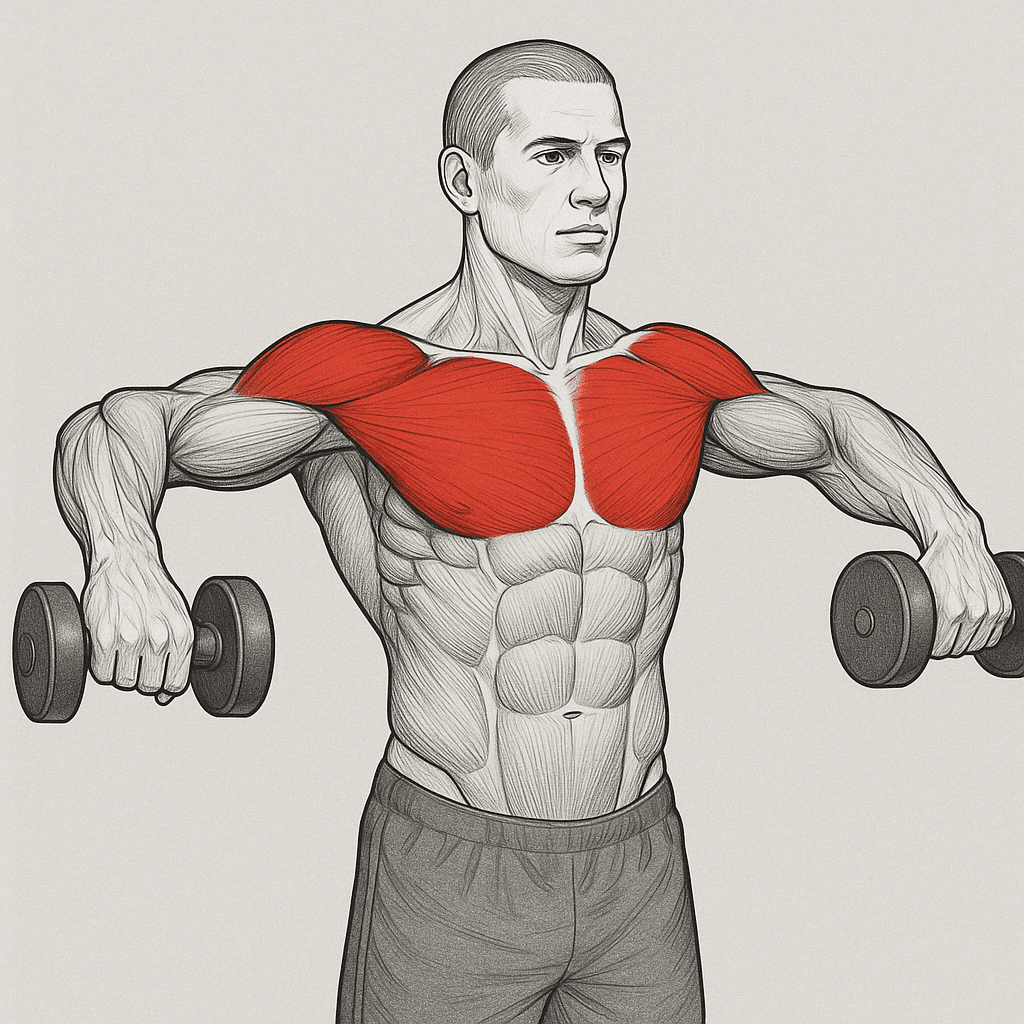

Mastering front delt isolation is essential for achieving peak physical transformation. The anterior deltoid is the most chronically overtrained and simultaneously most poorly balanced shoulder head among Indian home gym athletes. Almost every popular bodyweight exercise — pushups, incline pushups, decline pushups, pike pushups, dips, and shoulder presses — recruits the anterior deltoid as a primary mover. The result is an anterior deltoid that is strong but disproportionately dominant relative to the medial and posterior deltoid heads, creating a muscle imbalance with severe aesthetic, postural, and injury consequences.
nnnMastering front delt workout requires an uncompromising commitment to understanding human biomechanics, optimal training protocols, and evidence-based nutritional strategies. Many home fitness enthusiasts fall victim to commercial shortcuts or misleading advice, yet the actual biological pathways governing physical development follow precise scientific rules that, when understood and applied correctly, produce extraordinary and lasting results.
nnnThroughout this comprehensive guide on front delt workout, we will dismantle prevalent fitness myths and provide you with an actionable, step-by-step framework tailored specifically for the Indian lifestyle. Whether your goal is to build wider shoulders, fix postural imbalances, overcome training plateaus, or prevent shoulder injuries, every single instruction detailed below is backed by clinical research and proven athletic protocols used by elite coaches and physiotherapists.
nnnBefore initiating any intensive protocol for front delt workout, it is essential to establish baseline metrics and eliminate daily environmental habits that actively limit your shoulder development or recovery. By combining strict nutritional saturation, consistent training routines, and optimized recovery practices, you empower your body to express its maximum genetic and epigenetic potential without risk of orthopedic injury or overtraining syndrome.
nnnThe Anterior Deltoid Overtraining Epidemic Among Home Gym Athletes
nnnThe three primary consequences of anterior deltoid dominance are: first, rounded-forward shoulder posture as the overactive pec-anterior delt chain pulls the shoulder joint anteriorly out of neutral alignment; second, reduced visible shoulder width and roundness because the capped, 3D shoulder appearance requires balanced development of all three heads; and third, increased rotator cuff impingement risk as the anteriorly tilted humeral head reduces the subacromial space.
nnnCorrecting this imbalance requires not more anterior delt training but rather reduced anterior work combined with aggressive medial and posterior delt development. Most Indian home gym athletes are shocked to discover that their shoulder pain, limited shoulder width, and rounded posture are all caused by the very exercises they thought were building their shoulders — the excessive pushup volume that dominate most home training programs.
nnn
Why Pushups Dominate the Anterior Deltoid
nnnTo fully execute Why Pushups Dominate the Anterior Deltoid effectively, you must maintain uncompromised technical discipline and understand the underlying physiological mechanism. The biomechanical reason why horizontal pushing patterns primarily recruit front delt over medial and posterior heads. When executed consistently over a 60-to-90-day training cycle, this specific protocol forces profound structural adaptation, strengthening the surrounding connective tissues, improving localized vascularity, and enhancing neuromuscular coordination across the target muscle groups.
nnnFurthermore, integrating Why Pushups Dominate the Anterior Deltoid into your daily routine provides a direct competitive advantage over generic training programs. By focusing on progressive overload, strict time-under-tension, and optimal joint alignment during front delt workout, you eliminate common biomechanical bottlenecks and accelerate your body natural recovery capacity. Ensure that every repetition or static hold is performed with deliberate breathing and full range of motion to capture 100% of the anatomical benefits.
nnnThree Consequences of Anterior Deltoid Dominance
nnnTo fully execute Three Consequences of Anterior Deltoid Dominance effectively, you must maintain uncompromised technical discipline and understand the underlying physiological mechanism. Rounded posture, reduced shoulder width, and increased rotator cuff impingement risk from front-delt overtraining. When executed consistently over a 60-to-90-day training cycle, this specific protocol forces profound structural adaptation, strengthening the surrounding connective tissues, improving localized vascularity, and enhancing neuromuscular coordination across the target muscle groups.
nnnFurthermore, integrating Three Consequences of Anterior Deltoid Dominance into your daily routine provides a direct competitive advantage over generic training programs. By focusing on progressive overload, strict time-under-tension, and optimal joint alignment during front delt workout, you eliminate common biomechanical bottlenecks and accelerate your body natural recovery capacity. Ensure that every repetition or static hold is performed with deliberate breathing and full range of motion to capture 100% of the anatomical benefits.
nnnCorrecting the Imbalance: Reduce Front, Build Rear
nnnTo fully execute Correcting the Imbalance: Reduce Front, Build Rear effectively, you must maintain uncompromised technical discipline and understand the underlying physiological mechanism. Why fixing deltoid balance requires reducing anterior work while dramatically increasing medial and posterior volume. When executed consistently over a 60-to-90-day training cycle, this specific protocol forces profound structural adaptation, strengthening the surrounding connective tissues, improving localized vascularity, and enhancing neuromuscular coordination across the target muscle groups.
nnnFurthermore, integrating Correcting the Imbalance: Reduce Front, Build Rear into your daily routine provides a direct competitive advantage over generic training programs. By focusing on progressive overload, strict time-under-tension, and optimal joint alignment during front delt workout, you eliminate common biomechanical bottlenecks and accelerate your body natural recovery capacity. Ensure that every repetition or static hold is performed with deliberate breathing and full range of motion to capture 100% of the anatomical benefits.
nnnDiagnosing Your Deltoid Balance: The Home Assessment Protocol
nnnBefore prescribing specific training protocol adjustments, every home athlete must first assess whether their shoulder development is anterior-dominant, medial-dominant, or balanced. The simplest home assessment is the Overhead View Shoulder Test: stand in front of a mirror and raise both arms overhead in a Y position. If your shoulder joints visibly roll forward before reaching 150 degrees of elevation, you have significant anterior deltoid and subscapularis tightness indicating anterior dominance.
nnnThe second assessment is the Resting Thumb Position Test: with your arm in a fully relaxed position at your side, observe whether your shoulder rolls noticeably forward and your thumb naturally points backward rather than forward. Normal shoulder alignment has the thumb pointing forward and slightly outward. A backward-pointing thumb at rest indicates chronic anterior deltoid and subscapularis dominance that needs to be addressed before it creates shoulder pain.
nnn
Overhead Y Test for Internal Rotation Assessment
nnnTo fully execute Overhead Y Test for Internal Rotation Assessment effectively, you must maintain uncompromised technical discipline and understand the underlying physiological mechanism. Using the overhead Y position to identify shoulder internal rotation caused by anterior deltoid and pec tightness. When executed consistently over a 60-to-90-day training cycle, this specific protocol forces profound structural adaptation, strengthening the surrounding connective tissues, improving localized vascularity, and enhancing neuromuscular coordination across the target muscle groups.
nnnFurthermore, integrating Overhead Y Test for Internal Rotation Assessment into your daily routine provides a direct competitive advantage over generic training programs. By focusing on progressive overload, strict time-under-tension, and optimal joint alignment during front delt workout, you eliminate common biomechanical bottlenecks and accelerate your body natural recovery capacity. Ensure that every repetition or static hold is performed with deliberate breathing and full range of motion to capture 100% of the anatomical benefits.
nnnResting Thumb Position for Chronic Imbalance Detection
nnnTo fully execute Resting Thumb Position for Chronic Imbalance Detection effectively, you must maintain uncompromised technical discipline and understand the underlying physiological mechanism. How the resting rotational position of the thumb reveals chronic deltoid dominance patterns without special equipment. When executed consistently over a 60-to-90-day training cycle, this specific protocol forces profound structural adaptation, strengthening the surrounding connective tissues, improving localized vascularity, and enhancing neuromuscular coordination across the target muscle groups.
nnnFurthermore, integrating Resting Thumb Position for Chronic Imbalance Detection into your daily routine provides a direct competitive advantage over generic training programs. By focusing on progressive overload, strict time-under-tension, and optimal joint alignment during front delt workout, you eliminate common biomechanical bottlenecks and accelerate your body natural recovery capacity. Ensure that every repetition or static hold is performed with deliberate breathing and full range of motion to capture 100% of the anatomical benefits.
nnnAssessment-Based Program Individualization
nnnTo fully execute Assessment-Based Program Individualization effectively, you must maintain uncompromised technical discipline and understand the underlying physiological mechanism. How to adjust your home shoulder training emphasis based on which deltoid heads the assessment reveals as dominant. When executed consistently over a 60-to-90-day training cycle, this specific protocol forces profound structural adaptation, strengthening the surrounding connective tissues, improving localized vascularity, and enhancing neuromuscular coordination across the target muscle groups.
nnnFurthermore, integrating Assessment-Based Program Individualization into your daily routine provides a direct competitive advantage over generic training programs. By focusing on progressive overload, strict time-under-tension, and optimal joint alignment during front delt workout, you eliminate common biomechanical bottlenecks and accelerate your body natural recovery capacity. Ensure that every repetition or static hold is performed with deliberate breathing and full range of motion to capture 100% of the anatomical benefits.
nnnWhen and How to Train the Anterior Deltoid: Strategic Isolation
nnnThe anterior deltoid does not require dedicated direct training for most home pushup-dominant athletes because it already receives significant indirect stimulation from every pressing movement performed during a normal training week. However, certain specific situations call for strategic anterior delt isolation: competitive bodybuilders who need complete front delt development for posing, individuals with a naturally underdeveloped anterior head, and athletes recovering from posterior shoulder injuries.
nnnWhen anterior delt isolation is warranted, the most efficient home exercises are the Front Dumbbell Raise (lifting the dumbbell or water bottle forward to eye level with a neutral or pronated grip for 3 sets of 12 repetitions), and the Front Band Raise using a resistance band anchored behind the feet. Perform these exercises at the END of your shoulder training session only — never at the beginning, as pre-fatiguing the anterior delt limits compound pressing performance.
nnn
Three Situations That Justify Direct Front Delt Training
nnnTo fully execute Three Situations That Justify Direct Front Delt Training effectively, you must maintain uncompromised technical discipline and understand the underlying physiological mechanism. The specific athlete profiles and scenarios where anterior deltoid isolation exercise is genuinely warranted. When executed consistently over a 60-to-90-day training cycle, this specific protocol forces profound structural adaptation, strengthening the surrounding connective tissues, improving localized vascularity, and enhancing neuromuscular coordination across the target muscle groups.
nnnFurthermore, integrating Three Situations That Justify Direct Front Delt Training into your daily routine provides a direct competitive advantage over generic training programs. By focusing on progressive overload, strict time-under-tension, and optimal joint alignment during front delt workout, you eliminate common biomechanical bottlenecks and accelerate your body natural recovery capacity. Ensure that every repetition or static hold is performed with deliberate breathing and full range of motion to capture 100% of the anatomical benefits.
nnnDumbbell and Band Front Raise Technique at Home
nnnTo fully execute Dumbbell and Band Front Raise Technique at Home effectively, you must maintain uncompromised technical discipline and understand the underlying physiological mechanism. Proper form for the primary home anterior deltoid isolation exercises to maximize front delt targeting. When executed consistently over a 60-to-90-day training cycle, this specific protocol forces profound structural adaptation, strengthening the surrounding connective tissues, improving localized vascularity, and enhancing neuromuscular coordination across the target muscle groups.
nnnFurthermore, integrating Dumbbell and Band Front Raise Technique at Home into your daily routine provides a direct competitive advantage over generic training programs. By focusing on progressive overload, strict time-under-tension, and optimal joint alignment during front delt workout, you eliminate common biomechanical bottlenecks and accelerate your body natural recovery capacity. Ensure that every repetition or static hold is performed with deliberate breathing and full range of motion to capture 100% of the anatomical benefits.
nnnAlways Perform Front Delt Isolation at Session End
nnnTo fully execute Always Perform Front Delt Isolation at Session End effectively, you must maintain uncompromised technical discipline and understand the underlying physiological mechanism. Why front delt isolation must occur at the end of training to avoid limiting compound pressing performance. When executed consistently over a 60-to-90-day training cycle, this specific protocol forces profound structural adaptation, strengthening the surrounding connective tissues, improving localized vascularity, and enhancing neuromuscular coordination across the target muscle groups.
nnnFurthermore, integrating Always Perform Front Delt Isolation at Session End into your daily routine provides a direct competitive advantage over generic training programs. By focusing on progressive overload, strict time-under-tension, and optimal joint alignment during front delt workout, you eliminate common biomechanical bottlenecks and accelerate your body natural recovery capacity. Ensure that every repetition or static hold is performed with deliberate breathing and full range of motion to capture 100% of the anatomical benefits.
nnnThe Balanced Shoulder Blueprint: Correct Volume Ratios for Optimal Development
nnnThe ideal training volume ratio for balanced three-dimensional shoulder development follows what exercise scientists call the 1:2:1 ratio for anterior:medial:posterior deltoid direct training volume. This means that for every 1 set of direct anterior delt work, you should perform 2 sets of direct medial delt work and 1 set of direct posterior delt work. This ratio accounts for the anterior delt indirect stimulation from pressing movements.
nnnIn practical terms: if you are performing 6 sets of overhead pressing per week (which already provides significant anterior delt stimulus), add 12 sets of lateral raises and 6 sets of rear delt work to achieve balanced development. Most home athletes currently perform 12-20 sets of pushing per week that overload the anterior delt and only 2-4 sets of lateral and rear delt work — a 5 to 1 anterior to posterior ratio that directly causes their posture, appearance, and injury problems.
nnn
1:2:1 Volume Ratio for Three-Dimensional Shoulder Balance
nnnTo fully execute 1:2:1 Volume Ratio for Three-Dimensional Shoulder Balance effectively, you must maintain uncompromised technical discipline and understand the underlying physiological mechanism. The scientifically derived training volume ratio that produces balanced deltoid development across all three heads. When executed consistently over a 60-to-90-day training cycle, this specific protocol forces profound structural adaptation, strengthening the surrounding connective tissues, improving localized vascularity, and enhancing neuromuscular coordination across the target muscle groups.
nnnFurthermore, integrating 1:2:1 Volume Ratio for Three-Dimensional Shoulder Balance into your daily routine provides a direct competitive advantage over generic training programs. By focusing on progressive overload, strict time-under-tension, and optimal joint alignment during front delt workout, you eliminate common biomechanical bottlenecks and accelerate your body natural recovery capacity. Ensure that every repetition or static hold is performed with deliberate breathing and full range of motion to capture 100% of the anatomical benefits.
nnnCurrent Home Athlete Reality: The 5:1 Anterior Overload
nnnTo fully execute Current Home Athlete Reality: The 5:1 Anterior Overload effectively, you must maintain uncompromised technical discipline and understand the underlying physiological mechanism. The actual training volume disparity most home athletes have that creates their shoulder imbalance and pain. When executed consistently over a 60-to-90-day training cycle, this specific protocol forces profound structural adaptation, strengthening the surrounding connective tissues, improving localized vascularity, and enhancing neuromuscular coordination across the target muscle groups.
nnnFurthermore, integrating Current Home Athlete Reality: The 5:1 Anterior Overload into your daily routine provides a direct competitive advantage over generic training programs. By focusing on progressive overload, strict time-under-tension, and optimal joint alignment during front delt workout, you eliminate common biomechanical bottlenecks and accelerate your body natural recovery capacity. Ensure that every repetition or static hold is performed with deliberate breathing and full range of motion to capture 100% of the anatomical benefits.
nnnPractical Weekly Volume Calculation and Assignment
nnnTo fully execute Practical Weekly Volume Calculation and Assignment effectively, you must maintain uncompromised technical discipline and understand the underlying physiological mechanism. How to calculate and assign the correct number of sets to each deltoid head for optimal balanced weekly training. When executed consistently over a 60-to-90-day training cycle, this specific protocol forces profound structural adaptation, strengthening the surrounding connective tissues, improving localized vascularity, and enhancing neuromuscular coordination across the target muscle groups.
nnnFurthermore, integrating Practical Weekly Volume Calculation and Assignment into your daily routine provides a direct competitive advantage over generic training programs. By focusing on progressive overload, strict time-under-tension, and optimal joint alignment during front delt workout, you eliminate common biomechanical bottlenecks and accelerate your body natural recovery capacity. Ensure that every repetition or static hold is performed with deliberate breathing and full range of motion to capture 100% of the anatomical benefits.
nnnThe 4-Week Shoulder Rebalancing Program for Home Athletes
nnnWeek 1 (Assessment and Anterior Deload): Eliminate all pushup and dipping variations for 7 days. Replace with 4 days of pure posterior chain work: 4 sets of band face pulls, 3 sets of prone W-Y-T raises, and 4 sets of lateral raises. This week allows the anterior deltoid and pectoralis minor to begin releasing their chronic tension dominance while simultaneously building the neglected medial and posterior heads.
nnnWeek 2 (Volume Equalization): Reintroduce pushups at reduced volume of 2 sets maximum and triple the lateral raise and face pull volume to 5 sets each. Week 3 (Progressive Rebalancing): Introduce pike pushups as the primary pressing exercise alongside 6 sets of laterals and 4 sets of rear delt work. Week 4 (Maintenance Protocol): Establish the permanent 1:2:1 volume ratio that will be maintained going forward as the foundation of all future shoulder training.
nnn
Week 1 — Complete Anterior Rest and Posterior Loading
nnnTo fully execute Week 1 — Complete Anterior Rest and Posterior Loading effectively, you must maintain uncompromised technical discipline and understand the underlying physiological mechanism. Eliminating all pushing exercises for one week to allow anterior deltoid deactivation and posterior chain priority. When executed consistently over a 60-to-90-day training cycle, this specific protocol forces profound structural adaptation, strengthening the surrounding connective tissues, improving localized vascularity, and enhancing neuromuscular coordination across the target muscle groups.
nnnFurthermore, integrating Week 1 — Complete Anterior Rest and Posterior Loading into your daily routine provides a direct competitive advantage over generic training programs. By focusing on progressive overload, strict time-under-tension, and optimal joint alignment during front delt workout, you eliminate common biomechanical bottlenecks and accelerate your body natural recovery capacity. Ensure that every repetition or static hold is performed with deliberate breathing and full range of motion to capture 100% of the anatomical benefits.
nnnWeek 2-3 — Gradual Volume Reintroduction and Rebalancing
nnnTo fully execute Week 2-3 — Gradual Volume Reintroduction and Rebalancing effectively, you must maintain uncompromised technical discipline and understand the underlying physiological mechanism. Strategically reintroducing pressing while establishing 3:1 and then 2:1 posterior:anterior volume ratios. When executed consistently over a 60-to-90-day training cycle, this specific protocol forces profound structural adaptation, strengthening the surrounding connective tissues, improving localized vascularity, and enhancing neuromuscular coordination across the target muscle groups.
nnnFurthermore, integrating Week 2-3 — Gradual Volume Reintroduction and Rebalancing into your daily routine provides a direct competitive advantage over generic training programs. By focusing on progressive overload, strict time-under-tension, and optimal joint alignment during front delt workout, you eliminate common biomechanical bottlenecks and accelerate your body natural recovery capacity. Ensure that every repetition or static hold is performed with deliberate breathing and full range of motion to capture 100% of the anatomical benefits.
nnnWeek 4 — Permanent 1:2:1 Protocol Establishment
nnnTo fully execute Week 4 — Permanent 1:2:1 Protocol Establishment effectively, you must maintain uncompromised technical discipline and understand the underlying physiological mechanism. Settling into the evidence-based balanced shoulder training volume ratio that is maintained permanently going forward. When executed consistently over a 60-to-90-day training cycle, this specific protocol forces profound structural adaptation, strengthening the surrounding connective tissues, improving localized vascularity, and enhancing neuromuscular coordination across the target muscle groups.
nnnFurthermore, integrating Week 4 — Permanent 1:2:1 Protocol Establishment into your daily routine provides a direct competitive advantage over generic training programs. By focusing on progressive overload, strict time-under-tension, and optimal joint alignment during front delt workout, you eliminate common biomechanical bottlenecks and accelerate your body natural recovery capacity. Ensure that every repetition or static hold is performed with deliberate breathing and full range of motion to capture 100% of the anatomical benefits.
nnnBuilding Proportional Three-Dimensional Shoulder Aesthetics
nnnThe aesthetic goal of balanced shoulder training is the three-dimensional capped shoulder appearance — a shoulder that looks wide from the front (medial delt), thick and powerful from the side (all three heads combined), and full and rounded from the rear (posterior delt). This three-dimensional appearance is what distinguishes a physique athlete from a merely large-framed individual and is the direct result of properly balanced deltoid development.
nnnTo build this aesthetic, structure your weekly shoulder training as follows: 2 pressing movements for anterior and overall delt mass (overhead press and pike pushup at 6-8 total sets), 4-5 sets of lateral raises for medial delt width, 4-5 sets of face pulls for posterior delt and rotator cuff health, and 2-3 sets of bent-over rear delt raises for posterior delt isolation. This precise volume distribution, maintained consistently for 12 or more weeks, creates the visually impressive, structurally balanced shoulder architecture.
nnn
Front: Overhead Pressing for Anterior Delt Mass
nnnTo fully execute Front: Overhead Pressing for Anterior Delt Mass effectively, you must maintain uncompromised technical discipline and understand the underlying physiological mechanism. Programming 6-8 sets of pressing movements weekly to build anterior deltoid mass as part of a balanced routine. When executed consistently over a 60-to-90-day training cycle, this specific protocol forces profound structural adaptation, strengthening the surrounding connective tissues, improving localized vascularity, and enhancing neuromuscular coordination across the target muscle groups.
nnnFurthermore, integrating Front: Overhead Pressing for Anterior Delt Mass into your daily routine provides a direct competitive advantage over generic training programs. By focusing on progressive overload, strict time-under-tension, and optimal joint alignment during front delt workout, you eliminate common biomechanical bottlenecks and accelerate your body natural recovery capacity. Ensure that every repetition or static hold is performed with deliberate breathing and full range of motion to capture 100% of the anatomical benefits.
nnnSide: Lateral Raise Priority for Capped Shoulder Width
nnnTo fully execute Side: Lateral Raise Priority for Capped Shoulder Width effectively, you must maintain uncompromised technical discipline and understand the underlying physiological mechanism. Allocating 4-5 sets of lateral raises as the highest-volume single exercise in a balanced shoulder program. When executed consistently over a 60-to-90-day training cycle, this specific protocol forces profound structural adaptation, strengthening the surrounding connective tissues, improving localized vascularity, and enhancing neuromuscular coordination across the target muscle groups.
nnnFurthermore, integrating Side: Lateral Raise Priority for Capped Shoulder Width into your daily routine provides a direct competitive advantage over generic training programs. By focusing on progressive overload, strict time-under-tension, and optimal joint alignment during front delt workout, you eliminate common biomechanical bottlenecks and accelerate your body natural recovery capacity. Ensure that every repetition or static hold is performed with deliberate breathing and full range of motion to capture 100% of the anatomical benefits.
nnnRear: Face Pulls and Bent-Over Raises for 3D Completion
nnnTo fully execute Rear: Face Pulls and Bent-Over Raises for 3D Completion effectively, you must maintain uncompromised technical discipline and understand the underlying physiological mechanism. Posterior delt work that creates the final dimension of aesthetic three-dimensional shoulder development. When executed consistently over a 60-to-90-day training cycle, this specific protocol forces profound structural adaptation, strengthening the surrounding connective tissues, improving localized vascularity, and enhancing neuromuscular coordination across the target muscle groups.
nnnFurthermore, integrating Rear: Face Pulls and Bent-Over Raises for 3D Completion into your daily routine provides a direct competitive advantage over generic training programs. By focusing on progressive overload, strict time-under-tension, and optimal joint alignment during front delt workout, you eliminate common biomechanical bottlenecks and accelerate your body natural recovery capacity. Ensure that every repetition or static hold is performed with deliberate breathing and full range of motion to capture 100% of the anatomical benefits.
nnn
Frequently Asked Questions (FAQs) About Front Delt Workout
nnnHow do I know if my front deltoid is overdeveloped?
nnnSigns of anterior deltoid overdevelopment include: shoulders that visibly roll forward when standing naturally, difficulty touching both hands together behind the back, chronically tight chest muscles, shoulder pain during overhead movements, and a physique that looks round from the front but narrow from the side due to insufficient medial and posterior delt development. By strictly following the biomechanical principles and nutritional guidelines detailed in this guide on front delt workout, you can safely achieve rapid, noticeable improvements while protecting your long-term orthopedic health.
nnnShould I stop doing pushups if my front delts are overdeveloped?
nnnNot permanently, but a 1-2 week pushup rest while aggressively training rear delts and lateral deltoids helps reset the anterior-posterior balance. After the reset period, continue pushups but cap them at 2-3 sets per session while performing 6-8 sets of lateral raises and face pulls to maintain long-term deltoid balance. By strictly following the biomechanical principles and nutritional guidelines detailed in this guide on front delt workout, you can safely achieve rapid, noticeable improvements while protecting your long-term orthopedic health.
nnnCan I fix rounded shoulders by training rear delts and reducing pushups?
nnnYes, absolutely. Reducing anterior chain dominance by limiting pushup and pressing volume while dramatically increasing rear delt, rhomboid, and external rotator training volume is the primary corrective intervention for rounded shoulder posture. Results typically become visible within 4-6 weeks of consistent balanced training. By strictly following the biomechanical principles and nutritional guidelines detailed in this guide on front delt workout, you can safely achieve rapid, noticeable improvements while protecting your long-term orthopedic health.
nnnWhy do my shoulders always look flat even though I train them?
nnnFlat-looking shoulders despite training indicate medial and posterior deltoid underdevelopment. If your training is pushup-heavy, you are building the hidden front portion of your shoulder rather than the capped side head visible from the front. Add 4-6 sets of lateral raises and 3-4 sets of rear delt work to every shoulder session immediately. By strictly following the biomechanical principles and nutritional guidelines detailed in this guide on front delt workout, you can safely achieve rapid, noticeable improvements while protecting your long-term orthopedic health.
nnnIs it bad to train front delts directly if I already do pushups?
nnnYes, for most home pushup-dominant athletes, adding direct front raise exercises creates excessive anterior deltoid volume that deepens the existing imbalance. Reserve direct front delt isolation for competitive physique athletes or athletes with genuinely underdeveloped anterior heads, and focus additional shoulder work on lateral raises and rear delt exercises instead. By strictly following the biomechanical principles and nutritional guidelines detailed in this guide on front delt workout, you can safely achieve rapid, noticeable improvements while protecting your long-term orthopedic health.
n