
When time is limited and you are training without access to commercial gym machines, traditional straight-set training routines often fall short of providing the necessary volume and metabolic stress to trigger significant deltoid hypertrophy. The ultimate 20-minute shoulder superset routine solves this dilemma by pairing biomechanically complementary shoulder exercises performed back-to-back with minimal rest. This high-density training method forces immense blood flow, metabolic byproduct accumulation, and mechanical tension across all three deltoid heads simultaneously.
Mastering shoulder superset routine requires an uncompromising commitment to understanding human biomechanics, optimal training protocols, and evidence-based nutritional strategies. Many home fitness enthusiasts fall victim to commercial shortcuts or misleading advice, yet the actual biological pathways governing physical development follow precise scientific rules that, when understood and applied correctly, produce extraordinary and lasting results.
Throughout this comprehensive guide on shoulder superset routine, we will dismantle prevalent fitness myths and provide you with an actionable, step-by-step framework tailored specifically for the Indian lifestyle. Whether your goal is to build muscle, fix postural imbalances, overcome training plateaus, or prevent injuries, every single instruction detailed below is backed by clinical research and proven athletic protocols used by elite coaches and physiotherapists.
Before initiating any intensive protocol for shoulder superset routine, it is essential to establish baseline metrics and eliminate daily environmental habits that actively limit your development or recovery. By combining strict nutritional saturation, consistent training routines, and optimized recovery practices, you empower your body to express its maximum genetic and epigenetic potential without risk of orthopedic injury or overtraining syndrome.
Why Superset Training Is the Secret Weapon for Home Shoulder Growth
Supersets involve performing two exercises consecutively without rest between them. When applied to shoulder training at home, supersets exploit two distinct mechanisms of muscle growth: high-threshold motor unit fatigue from compound pressing movements immediately followed by severe metabolic stress from isolation exercises. This combination creates an anabolic environment that standard sets requiring 3 minutes of rest simply cannot duplicate within a compact time window.
The human deltoid complex is composed of roughly 50 percent fast-twitch Type II fibers and 50 percent slow-twitch Type I fibers. By structuring your shoulder superset routine to pair a 6-to-8 repetition heavy overhead press variant directly with a 15-to-25 repetition lateral raise or pull-apart variant, you systematically exhaust both fiber types within a single 90-second work block, ensuring 100 percent muscle fiber recruitment across anterior, medial, and posterior heads.

Dual-Stimulus Hypertrophy Mechanism
To fully execute Dual-Stimulus Hypertrophy Mechanism effectively, you must maintain uncompromised technical discipline and understand the underlying physiological mechanism. How pairing mechanical tension compound movements with metabolic stress isolation movements maximizes deltoid protein synthesis. When executed consistently over a 60-to-90-day training cycle, this specific protocol forces profound structural adaptation, strengthening the surrounding connective tissues, improving localized vascularity, and enhancing neuromuscular coordination across the target muscle groups.
Furthermore, integrating Dual-Stimulus Hypertrophy Mechanism into your daily routine provides a direct competitive advantage over generic training programs. By focusing on progressive overload, strict time-under-tension, and optimal joint alignment during shoulder superset routine, you eliminate common biomechanical bottlenecks and accelerate your body natural recovery capacity. Ensure that every repetition or static hold is performed with deliberate breathing and full range of motion to capture 100% of the anatomical benefits.
Type I and Type II Fiber Exhaustion
To fully execute Type I and Type II Fiber Exhaustion effectively, you must maintain uncompromised technical discipline and understand the underlying physiological mechanism. Targeting both fast-twitch and slow-twitch muscle fibers within a single continuous 90-second superset work block. When executed consistently over a 60-to-90-day training cycle, this specific protocol forces profound structural adaptation, strengthening the surrounding connective tissues, improving localized vascularity, and enhancing neuromuscular coordination across the target muscle groups.
Furthermore, integrating Type I and Type II Fiber Exhaustion into your daily routine provides a direct competitive advantage over generic training programs. By focusing on progressive overload, strict time-under-tension, and optimal joint alignment during shoulder superset routine, you eliminate common biomechanical bottlenecks and accelerate your body natural recovery capacity. Ensure that every repetition or static hold is performed with deliberate breathing and full range of motion to capture 100% of the anatomical benefits.
Cardiovascular and Capillary Density Benefits
To fully execute Cardiovascular and Capillary Density Benefits effectively, you must maintain uncompromised technical discipline and understand the underlying physiological mechanism. Why high-density superset training enhances local capillary density and nutrient delivery to shoulder muscle tissues. When executed consistently over a 60-to-90-day training cycle, this specific protocol forces profound structural adaptation, strengthening the surrounding connective tissues, improving localized vascularity, and enhancing neuromuscular coordination across the target muscle groups.
Furthermore, integrating Cardiovascular and Capillary Density Benefits into your daily routine provides a direct competitive advantage over generic training programs. By focusing on progressive overload, strict time-under-tension, and optimal joint alignment during shoulder superset routine, you eliminate common biomechanical bottlenecks and accelerate your body natural recovery capacity. Ensure that every repetition or static hold is performed with deliberate breathing and full range of motion to capture 100% of the anatomical benefits.
Superset Pair 1: Pike Pushups Paired With Water Bottle Lateral Raises
The foundational pair of this 20-minute routine combines the bodyweight Pike Pushup with unilateral or bilateral Water Bottle Lateral Raises. Begin by positioning your body in an inverted-V shape with hands slightly wider than shoulder-width, lowering your head under strict control over 3 seconds until your nose touches the floor, then explosively pressing back to full lockout. Perform 10 to 12 strict repetitions to thoroughly pre-fatigue the anterior and medial deltoid heads.
Immediately upon completing the 12th pike pushup repetition, grab two 1.5-liter or 2-liter water bottles (or dumbbells) and initiate 15 to 20 strict lateral raises. Because your anterior head is pre-exhausted from the pushups, your medial deltoid is forced to bear nearly 100 percent of the abduction load during the lateral raises. Maintain a slight 15-degree forward torso lean and lead with your elbows to ensure pure medial deltoid isolation.

Pre-Exhaustion Biomechanics
To fully execute Pre-Exhaustion Biomechanics effectively, you must maintain uncompromised technical discipline and understand the underlying physiological mechanism. Why pre-fatiguing the anterior deltoid via pike pushups forces maximum medial deltoid recruitment during subsequent lateral raises. When executed consistently over a 60-to-90-day training cycle, this specific protocol forces profound structural adaptation, strengthening the surrounding connective tissues, improving localized vascularity, and enhancing neuromuscular coordination across the target muscle groups.
Furthermore, integrating Pre-Exhaustion Biomechanics into your daily routine provides a direct competitive advantage over generic training programs. By focusing on progressive overload, strict time-under-tension, and optimal joint alignment during shoulder superset routine, you eliminate common biomechanical bottlenecks and accelerate your body natural recovery capacity. Ensure that every repetition or static hold is performed with deliberate breathing and full range of motion to capture 100% of the anatomical benefits.
Elbow-Lead Abduction Technique
To fully execute Elbow-Lead Abduction Technique effectively, you must maintain uncompromised technical discipline and understand the underlying physiological mechanism. Executing water bottle lateral raises with internal rotation bias to eliminate trapezius dominance and hit side delts. When executed consistently over a 60-to-90-day training cycle, this specific protocol forces profound structural adaptation, strengthening the surrounding connective tissues, improving localized vascularity, and enhancing neuromuscular coordination across the target muscle groups.
Furthermore, integrating Elbow-Lead Abduction Technique into your daily routine provides a direct competitive advantage over generic training programs. By focusing on progressive overload, strict time-under-tension, and optimal joint alignment during shoulder superset routine, you eliminate common biomechanical bottlenecks and accelerate your body natural recovery capacity. Ensure that every repetition or static hold is performed with deliberate breathing and full range of motion to capture 100% of the anatomical benefits.
Rest-Interval Optimization
To fully execute Rest-Interval Optimization effectively, you must maintain uncompromised technical discipline and understand the underlying physiological mechanism. Keeping transition time under 10 seconds between exercises and resting exactly 90 seconds after completing both movements. When executed consistently over a 60-to-90-day training cycle, this specific protocol forces profound structural adaptation, strengthening the surrounding connective tissues, improving localized vascularity, and enhancing neuromuscular coordination across the target muscle groups.
Furthermore, integrating Rest-Interval Optimization into your daily routine provides a direct competitive advantage over generic training programs. By focusing on progressive overload, strict time-under-tension, and optimal joint alignment during shoulder superset routine, you eliminate common biomechanical bottlenecks and accelerate your body natural recovery capacity. Ensure that every repetition or static hold is performed with deliberate breathing and full range of motion to capture 100% of the anatomical benefits.
Superset Pair 2: Resistance Band Overhead Press Paired With Band Pull-Aparts
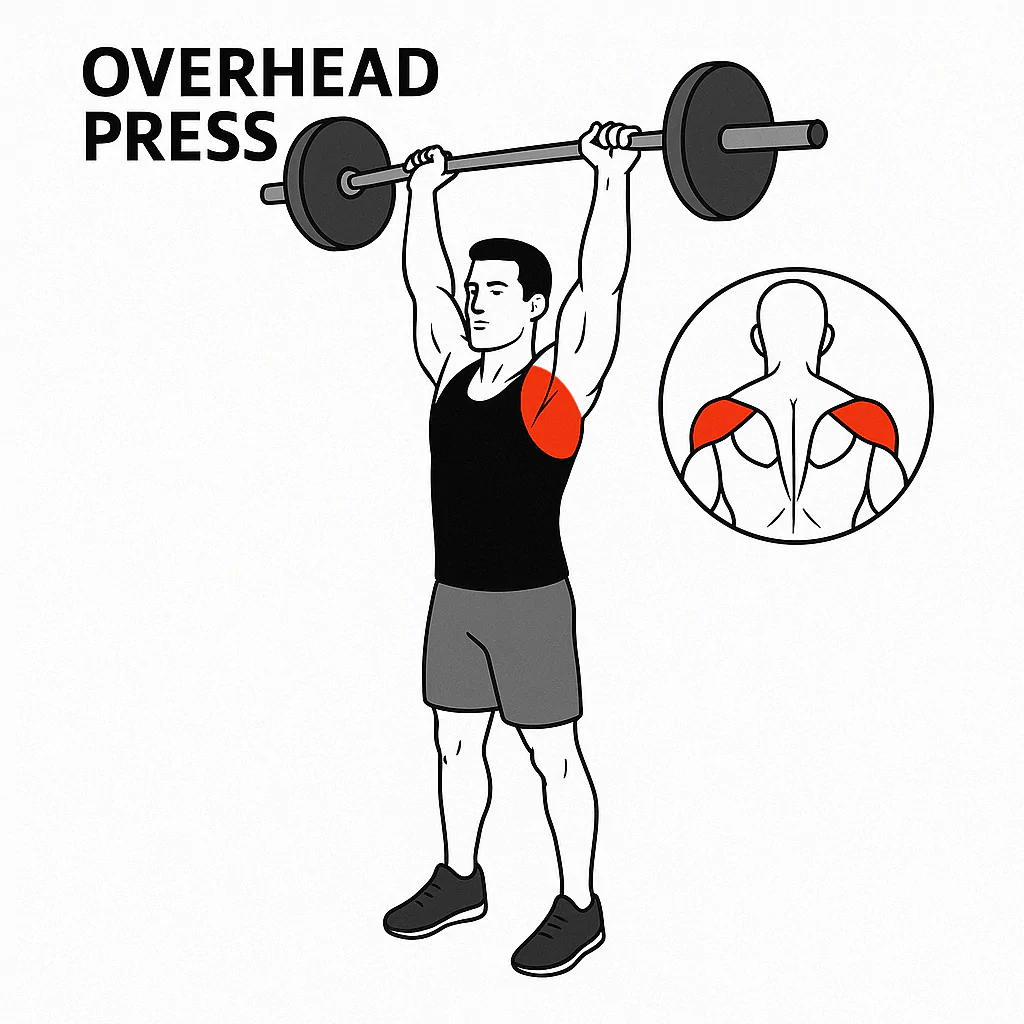
The second superset transitions focus toward complete three-dimensional roundness by pairing vertical pressing under accommodating resistance with direct posterior chain isolation. Step onto a medium-to-heavy resistance band with both feet at shoulder width, grasp the loop at collarbone height, and press overhead for 12 to 15 reps. The band resistance increases linearly at the top where your shoulder joint is strongest, creating maximum peak contraction.
Without dropping the band, step off the anchor and hold a single layer of the band with hands at shoulder-width directly in front of your chest. Immediately execute 20 to 25 rapid, controlled band pull-aparts, retracting your shoulder blades and squeezing your posterior deltoids at the end of every repetition. This pair balances the pressing forces with external rotation and horizontal abduction, locking in proper shoulder posture.

Accommodating Resistance Pressing
To fully execute Accommodating Resistance Pressing effectively, you must maintain uncompromised technical discipline and understand the underlying physiological mechanism. How linear resistance bands match the natural strength curve of the shoulder joint during overhead pressing. When executed consistently over a 60-to-90-day training cycle, this specific protocol forces profound structural adaptation, strengthening the surrounding connective tissues, improving localized vascularity, and enhancing neuromuscular coordination across the target muscle groups.
Furthermore, integrating Accommodating Resistance Pressing into your daily routine provides a direct competitive advantage over generic training programs. By focusing on progressive overload, strict time-under-tension, and optimal joint alignment during shoulder superset routine, you eliminate common biomechanical bottlenecks and accelerate your body natural recovery capacity. Ensure that every repetition or static hold is performed with deliberate breathing and full range of motion to capture 100% of the anatomical benefits.
Posterior Chain Postural Balance
To fully execute Posterior Chain Postural Balance effectively, you must maintain uncompromised technical discipline and understand the underlying physiological mechanism. Counteracting anterior pressing forces with immediate high-repetition band pull-aparts to protect rotator cuff integrity. When executed consistently over a 60-to-90-day training cycle, this specific protocol forces profound structural adaptation, strengthening the surrounding connective tissues, improving localized vascularity, and enhancing neuromuscular coordination across the target muscle groups.
Furthermore, integrating Posterior Chain Postural Balance into your daily routine provides a direct competitive advantage over generic training programs. By focusing on progressive overload, strict time-under-tension, and optimal joint alignment during shoulder superset routine, you eliminate common biomechanical bottlenecks and accelerate your body natural recovery capacity. Ensure that every repetition or static hold is performed with deliberate breathing and full range of motion to capture 100% of the anatomical benefits.
Metabolic Burnout Finisher
To fully execute Metabolic Burnout Finisher effectively, you must maintain uncompromised technical discipline and understand the underlying physiological mechanism. Using 25 consecutive reps of band pull-aparts to flood the posterior shoulder capsule with growth-inducing lactate. When executed consistently over a 60-to-90-day training cycle, this specific protocol forces profound structural adaptation, strengthening the surrounding connective tissues, improving localized vascularity, and enhancing neuromuscular coordination across the target muscle groups.
Furthermore, integrating Metabolic Burnout Finisher into your daily routine provides a direct competitive advantage over generic training programs. By focusing on progressive overload, strict time-under-tension, and optimal joint alignment during shoulder superset routine, you eliminate common biomechanical bottlenecks and accelerate your body natural recovery capacity. Ensure that every repetition or static hold is performed with deliberate breathing and full range of motion to capture 100% of the anatomical benefits.
Superset Pair 3: Arnold Press Paired With Isometric Wall Holds
The final superset pair serves as the ultimate metabolic finisher, pairing three-dimensional rotational pressing with static time-under-tension overload. Using dumbbells, heavy water bottles, or loaded backpacks, perform 10 repetitions of the Arnold Press, rotating your palms from facing your torso at the bottom to facing forward at the top of the press to sequentially sweep through all three deltoid heads.
The instant you finish the 10th Arnold press, drop the weights, stand facing a sturdy wall at arm’s length, place your palms flat against the wall at eye level, and push forward with maximal isometric force for exactly 45 seconds. This static hold recruits the highest-threshold stabilizer motor units while trapping metabolic byproducts inside the muscle fibers, producing an extraordinary deltoid pump.

Rotational Deltoid Sweeping
To fully execute Rotational Deltoid Sweeping effectively, you must maintain uncompromised technical discipline and understand the underlying physiological mechanism. How the Arnold press wrist rotation shifts mechanical loading from anterior to medial and posterior heads smoothly. When executed consistently over a 60-to-90-day training cycle, this specific protocol forces profound structural adaptation, strengthening the surrounding connective tissues, improving localized vascularity, and enhancing neuromuscular coordination across the target muscle groups.
Furthermore, integrating Rotational Deltoid Sweeping into your daily routine provides a direct competitive advantage over generic training programs. By focusing on progressive overload, strict time-under-tension, and optimal joint alignment during shoulder superset routine, you eliminate common biomechanical bottlenecks and accelerate your body natural recovery capacity. Ensure that every repetition or static hold is performed with deliberate breathing and full range of motion to capture 100% of the anatomical benefits.
Maximal Isometric Overload
To fully execute Maximal Isometric Overload effectively, you must maintain uncompromised technical discipline and understand the underlying physiological mechanism. Pushing against an immovable wall to recruit 100 percent of remaining un-fatigued deltoid motor units safely. When executed consistently over a 60-to-90-day training cycle, this specific protocol forces profound structural adaptation, strengthening the surrounding connective tissues, improving localized vascularity, and enhancing neuromuscular coordination across the target muscle groups.
Furthermore, integrating Maximal Isometric Overload into your daily routine provides a direct competitive advantage over generic training programs. By focusing on progressive overload, strict time-under-tension, and optimal joint alignment during shoulder superset routine, you eliminate common biomechanical bottlenecks and accelerate your body natural recovery capacity. Ensure that every repetition or static hold is performed with deliberate breathing and full range of motion to capture 100% of the anatomical benefits.
Ischemia and Reperfusion Pump
To fully execute Ischemia and Reperfusion Pump effectively, you must maintain uncompromised technical discipline and understand the underlying physiological mechanism. Trapping blood inside the deltoid via static contraction to trigger massive cellular swelling upon release. When executed consistently over a 60-to-90-day training cycle, this specific protocol forces profound structural adaptation, strengthening the surrounding connective tissues, improving localized vascularity, and enhancing neuromuscular coordination across the target muscle groups.
Furthermore, integrating Ischemia and Reperfusion Pump into your daily routine provides a direct competitive advantage over generic training programs. By focusing on progressive overload, strict time-under-tension, and optimal joint alignment during shoulder superset routine, you eliminate common biomechanical bottlenecks and accelerate your body natural recovery capacity. Ensure that every repetition or static hold is performed with deliberate breathing and full range of motion to capture 100% of the anatomical benefits.
Complete 20-Minute Execution Protocol and Progression Rules
To execute the entire 20-minute shoulder superset routine effectively, set a digital timer for exactly 20 minutes. Perform 3 complete rounds of Superset Pair 1 (resting 60 seconds between rounds), immediately transition into 3 complete rounds of Superset Pair 2 (resting 60 seconds between rounds), and finish with 2 all-out rounds of Superset Pair 3. Total working time is exactly 18 to 20 minutes of unrelenting deltoid stimulation.
Progressive overload in this home routine is achieved not just by adding weight, but by manipulating work density. In Week 1, rest 60 seconds after each superset pair. In Week 2, reduce rest periods to 50 seconds. In Week 3, reduce rest periods to 40 seconds while maintaining the exact same repetition targets. By compressing the rest intervals while keeping work volume constant, you systematically increase metabolic stress and drive continuous shoulder widening.

Timer-Driven Workout Density
To fully execute Timer-Driven Workout Density effectively, you must maintain uncompromised technical discipline and understand the underlying physiological mechanism. Structuring your 20-minute session with exact rest intervals to eliminate wasted time and maintain high heart rates. When executed consistently over a 60-to-90-day training cycle, this specific protocol forces profound structural adaptation, strengthening the surrounding connective tissues, improving localized vascularity, and enhancing neuromuscular coordination across the target muscle groups.
Furthermore, integrating Timer-Driven Workout Density into your daily routine provides a direct competitive advantage over generic training programs. By focusing on progressive overload, strict time-under-tension, and optimal joint alignment during shoulder superset routine, you eliminate common biomechanical bottlenecks and accelerate your body natural recovery capacity. Ensure that every repetition or static hold is performed with deliberate breathing and full range of motion to capture 100% of the anatomical benefits.
Rest-Compression Overload Strategy
To fully execute Rest-Compression Overload Strategy effectively, you must maintain uncompromised technical discipline and understand the underlying physiological mechanism. Shaving 10 seconds off rest intervals weekly as a scientifically valid method of progressive overload at home. When executed consistently over a 60-to-90-day training cycle, this specific protocol forces profound structural adaptation, strengthening the surrounding connective tissues, improving localized vascularity, and enhancing neuromuscular coordination across the target muscle groups.
Furthermore, integrating Rest-Compression Overload Strategy into your daily routine provides a direct competitive advantage over generic training programs. By focusing on progressive overload, strict time-under-tension, and optimal joint alignment during shoulder superset routine, you eliminate common biomechanical bottlenecks and accelerate your body natural recovery capacity. Ensure that every repetition or static hold is performed with deliberate breathing and full range of motion to capture 100% of the anatomical benefits.
Bi-Weekly Shoulder Measurement Tracking
To fully execute Bi-Weekly Shoulder Measurement Tracking effectively, you must maintain uncompromised technical discipline and understand the underlying physiological mechanism. How to measure bi-acromial shoulder width every 14 days to verify tangible hypertrophic adaptations. When executed consistently over a 60-to-90-day training cycle, this specific protocol forces profound structural adaptation, strengthening the surrounding connective tissues, improving localized vascularity, and enhancing neuromuscular coordination across the target muscle groups.
Furthermore, integrating Bi-Weekly Shoulder Measurement Tracking into your daily routine provides a direct competitive advantage over generic training programs. By focusing on progressive overload, strict time-under-tension, and optimal joint alignment during shoulder superset routine, you eliminate common biomechanical bottlenecks and accelerate your body natural recovery capacity. Ensure that every repetition or static hold is performed with deliberate breathing and full range of motion to capture 100% of the anatomical benefits.
Indian Nutrition Protocol for Rapid Superset Recovery
Because this 20-minute shoulder superset routine induces severe muscle glycogen depletion and localized muscle fiber micro-trauma, your post-workout nutritional intake determines whether you recover and grow or remain stagnant. Within 45 minutes of finishing the workout, consume a fast-digesting protein source combined with simple carbohydrates to spike insulin and shuttle amino acids directly into the fatigued deltoid tissues.
An ideal Indian home post-workout recovery meal consists of 1 scoop of whey protein in 300ml whole milk blended with 2 ripe bananas, or 200g of organic homemade paneer bhurji paired with 3 white rice chapatis and dal. Ensure daily protein intake hits a hard minimum of 1.8 grams per kilogram of bodyweight, supported by 3 to 5 grams of daily creatine monohydrate to replenish intramuscular phosphocreatine stores for your next high-density session.

The 45-Minute Anabolic Window
To fully execute The 45-Minute Anabolic Window effectively, you must maintain uncompromised technical discipline and understand the underlying physiological mechanism. Shuttling fast-absorbing amino acids and carbohydrates into depleted shoulder muscles immediately post-workout. When executed consistently over a 60-to-90-day training cycle, this specific protocol forces profound structural adaptation, strengthening the surrounding connective tissues, improving localized vascularity, and enhancing neuromuscular coordination across the target muscle groups.
Furthermore, integrating The 45-Minute Anabolic Window into your daily routine provides a direct competitive advantage over generic training programs. By focusing on progressive overload, strict time-under-tension, and optimal joint alignment during shoulder superset routine, you eliminate common biomechanical bottlenecks and accelerate your body natural recovery capacity. Ensure that every repetition or static hold is performed with deliberate breathing and full range of motion to capture 100% of the anatomical benefits.
Indian High-Protein Meal Combinations
To fully execute Indian High-Protein Meal Combinations effectively, you must maintain uncompromised technical discipline and understand the underlying physiological mechanism. Utilizing paneer, milk, dal, and chapatis to achieve the 1.8g/kg protein threshold without relying solely on supplements. When executed consistently over a 60-to-90-day training cycle, this specific protocol forces profound structural adaptation, strengthening the surrounding connective tissues, improving localized vascularity, and enhancing neuromuscular coordination across the target muscle groups.
Furthermore, integrating Indian High-Protein Meal Combinations into your daily routine provides a direct competitive advantage over generic training programs. By focusing on progressive overload, strict time-under-tension, and optimal joint alignment during shoulder superset routine, you eliminate common biomechanical bottlenecks and accelerate your body natural recovery capacity. Ensure that every repetition or static hold is performed with deliberate breathing and full range of motion to capture 100% of the anatomical benefits.
Creatine Monohydrate Phospho-Replenishment
To fully execute Creatine Monohydrate Phospho-Replenishment effectively, you must maintain uncompromised technical discipline and understand the underlying physiological mechanism. Why daily creatine supplementation is non-negotiable for sustaining power output during high-density superset routines. When executed consistently over a 60-to-90-day training cycle, this specific protocol forces profound structural adaptation, strengthening the surrounding connective tissues, improving localized vascularity, and enhancing neuromuscular coordination across the target muscle groups.
Furthermore, integrating Creatine Monohydrate Phospho-Replenishment into your daily routine provides a direct competitive advantage over generic training programs. By focusing on progressive overload, strict time-under-tension, and optimal joint alignment during shoulder superset routine, you eliminate common biomechanical bottlenecks and accelerate your body natural recovery capacity. Ensure that every repetition or static hold is performed with deliberate breathing and full range of motion to capture 100% of the anatomical benefits.

Frequently Asked Questions (FAQs) About Shoulder Superset Routine
Can a 20-minute shoulder workout really build muscle as well as a 60-minute gym session?
Yes, absolutely. By utilizing superset density pairings with compressed rest intervals, a 20-minute home workout can accumulate the exact same effective time-under-tension and metabolic stress as a traditional 60-minute gym session where 45 minutes are spent resting or waiting for equipment. By strictly following the biomechanical principles and nutritional guidelines detailed in this guide on shoulder superset routine, you can safely achieve rapid, noticeable improvements while protecting your long-term orthopedic health.
How often should I perform this 20-minute shoulder superset routine each week?
For optimal deltoid recovery and growth, perform this exact routine 2 to 3 non-consecutive days per week (for example, Tuesday and Friday, or Monday, Wednesday, and Saturday). Allow at least 48 hours of rest between sessions to permit complete muscle protein synthesis. By strictly following the biomechanical principles and nutritional guidelines detailed in this guide on shoulder superset routine, you can safely achieve rapid, noticeable improvements while protecting your long-term orthopedic health.
What should I do if my shoulders start clicking or burning during the supersets?
A deep muscular burning sensation is normal and desired during supersets due to lactic acid accumulation. However, sharp joint pain or mechanical clicking indicates internal rotation impingement. If clicking occurs, externally rotate your wrists slightly (thumbs pointing outward) and reduce the range of motion until the movement is entirely smooth and pain-free. By strictly following the biomechanical principles and nutritional guidelines detailed in this guide on shoulder superset routine, you can safely achieve rapid, noticeable improvements while protecting your long-term orthopedic health.
Can beginners do this shoulder superset routine without resistance bands or dumbbells?
Yes. Complete beginners can perform Superset Pair 1 using standard incline pushups paired with 1-liter water bottle lateral raises, and substitute towel pull-aparts under isometric tension for resistance band movements. Focus on mastering form before advancing to heavier resistance. By strictly following the biomechanical principles and nutritional guidelines detailed in this guide on shoulder superset routine, you can safely achieve rapid, noticeable improvements while protecting your long-term orthopedic health.
Why do my traps get sore when I do shoulder supersets?
Trapezius soreness during shoulder supersets occurs when you unconsciously shrug your shoulders upward while lifting when fatigued. To prevent trap dominance, actively depress your shoulder blades downward toward your back pockets before initiating every repetition of lateral raises or overhead presses. By strictly following the biomechanical principles and nutritional guidelines detailed in this guide on shoulder superset routine, you can safely achieve rapid, noticeable improvements while protecting your long-term orthopedic health.